


If you’ve been earning in naira over the past few years, you don’t need a lecture on currency risk. You’ve felt it. Groceries cost more. Rent has crept up. And that ₦1 million you saved three years ago doesn’t carry the same weight today.
That’s why more upwardly mobile Nigerians like professionals, freelancers, and entrepreneurs alike are looking beyond local currency investments. They want something stronger, more stable, and capable of keeping pace with the realities of a global economy.
One option that’s gaining attention? Eurobonds. According to report, Nigerian sovereign Eurobonds currently offer yields ranging from 8% to 13%, depending on maturity and credit risk.
But what exactly are Eurobonds, how do they work, and more importantly, can you legally invest in Eurobonds from Nigeria without running into red tape?
This guide breaks it all down in simple terms, no finance degree required. Also, how platforms like Sycamore offer a more practical alternative for dollar-linked returns without all the complexity.
What Are Eurobonds, Exactly?

A Eurobond might sound like something issued by European governments but that’s not what it means at all. Simply put, a Eurobond is a type of bond issued in a foreign currency, usually to attract international investors. In Nigeria’s case, that typically means bonds issued in US dollars, even by Nigerian institutions.
Imagine this: the Nigerian government wants to raise funds for infrastructure but decides to borrow from the global market instead of just local investors. To do that, it issues a bond in dollars. That bond is a Eurobond.
So when you invest in Eurobonds from Nigeria, you’re essentially lending money to a government or corporation, often your own country’s in exchange for fixed interest payments in a foreign currency, usually USD. And when that bond matures, you get your original dollar investment back.
Eurobonds issued by entities like the Government of Nigeria, Dangote Industries, or even African subsidiaries of international banks have become increasingly popular. These are attractive to investors looking for dollar income, stability, and a way to protect their wealth from naira volatility.
The key feature? You earn in dollars. That’s what makes it such an appealing hedge for Nigerian professionals trying to protect the real value of their income or long-term savings.
Why Eurobonds Appeal to Nigerian Professionals
There’s a simple reason Eurobonds are catching the attention of Nigerian professionals: they check boxes that most naira-based investments just don’t. From stability to better returns, they offer a foreign-currency advantage without demanding you move abroad.
First, let’s talk about returns. Government-issued Eurobonds often pay between 6% to 10% annually in US dollars. That’s not bad considering many local savings accounts struggle to beat inflation.
Corporate Eurobonds can even offer more, although with slightly higher risk. Either way, you’re earning in a stronger currency, not one that loses value every few months.
Second, there’s the issue of stability. Unlike stocks or cryptocurrency, Eurobonds are fixed-income. That means you get predictable interest payments, usually twice a year. For long-term planning, like saving for a child’s education or preparing to retire abroad, this kind of financial consistency is a big deal.
Third, it’s an effective hedge against naira depreciation. Let’s break that down. Say you invest $1,000 in a 5-year Eurobond offering 8% interest. Over five years, you’ll receive $400 in total interest, paid in dollars.
Meanwhile, if the naira weakens (as it often does), your returns in naira terms actually increase when converted. You’ve protected your wealth, and possibly even outpaced local inflation.
Is It Legal to Invest in Eurobonds from Nigeria?
Yes, it’s absolutely legal for you to invest in Eurobonds from Nigeria, provided you go through the right channels. Nigeria has a fairly open framework when it comes to foreign-denominated investments, thanks to its liberalized foreign exchange policy. But legality isn’t just about permission but about compliance.
So, what makes a Eurobond investment legal for a Nigerian resident? You must invest through CBN-approved and SEC-regulated institutions. That could mean a licensed investment bank, an authorized broker with an international trading desk, or a digital platform that offers indirect exposure through regulated financial products.
These institutions are required to follow the rules on documentation, fund transfers, and tax reporting.
For example:
- Licensed brokers like ARM Securities or Stanbic IBTC offer direct access to global fixed-income instruments, including Eurobonds.
- Mutual fund managers regulated by the Securities and Exchange Commission (SEC) in Nigeria often pool investor funds into Eurobond portfolios.
- Some fintech platforms provide access to structured products backed by Eurobonds but only if they’re registered with the SEC.
If someone is offering you Eurobond access through unofficial forex dealers or tells you to bypass banks using “fast offshore routes,” walk away. Not only is that risky, it could also expose you to fraud, regulatory penalties, or loss of funds.
How to Invest in Eurobonds from Nigeria; Step-by-Step
Once you’ve confirmed that you’re ready, and that you’re using a legal channel, the next step is knowing how to actually make the investment. There are three main routes, each with its own entry requirements, pros, and levels of involvement.
Option 1: Direct Purchase via Licensed Brokers
This is the most straightforward method if you want to buy a specific Eurobond directly and hold it until maturity.
Here’s how it works:
- Open a global investment account with a licensed Nigerian broker that has access to international markets. You’ll typically need to provide your BVN, a valid ID, proof of address, and show the source of funds.
- Fund the account in USD, often via Form A (a CBN-approved foreign exchange process for tuition, investments, and medical expenses) or from a domiciliary account.
- Choose a Eurobond, for example, the Nigerian government’s 2032 bond or a Dangote-issued corporate bond.
- Invest a minimum amount, which can range from $1,000 to $5,000, depending on the bond and broker.
Option 2: Indirect Purchase via Eurobond Mutual Funds
If you don’t want to deal with USD transfers or choose bonds yourself, mutual funds offer a convenient alternative.
- These funds are managed by SEC-registered Nigerian asset managers and invest in a mix of Eurobonds.
- You can invest in naira, and although returns are still tied to dollar performance, your interest is paid in naira equivalents.
- Minimum entry is much lower, often ₦10,000 to ₦50,000, making it accessible even if you’re just testing the waters.
Option 3: Fintech Platforms with FX Bond Products
Some digital investment platforms in Nigeria now offer structured products backed by Eurobonds, combining the benefits of foreign exposure with local accessibility.
- These platforms allow naira funding while delivering USD-linked yields.
- You’ll still need to check that the platform is SEC-cleared and compliant. Don’t skip this.
- The experience is often simplified, no need for Form A, no minimum $5,000 entry, and returns may be automated.
Key Risks to Know Before Investing
As attractive as Eurobonds are, they’re not magic bullets. Like every investment, they come with risks, and understanding those risks is what separates smart investors from reactive ones.
If you’re considering investing in Eurobonds from Nigeria, here’s what you need to keep an eye on.
1. Currency Transfer Risk
Even though Eurobonds are dollar-denominated, you still need to move money across borders. That means you’re subject to FX regulations, Form A delays, and policy shifts by the Central Bank of Nigeria. In times of tight dollar supply, accessing your funds, or repatriating them, can take longer than expected.
2. Credit Risk
Not all bond issuers are equal. While government-issued Eurobonds are generally safer, corporate bonds, even those from well-known brands, carry a real risk of default. If the issuing company struggles financially or fails to meet its obligations, you could lose part (or all) of your investment.
3. Price Volatility
Just because Eurobonds are fixed-income doesn’t mean they don’t fluctuate. Bonds trade on secondary markets, and their prices can rise or fall depending on global interest rates and market sentiment. If you try to sell before maturity, the price you get may be lower than what you paid.
4. Liquidity Risk
Some Eurobonds, especially those issued by smaller corporations, aren’t easily bought or sold. If you need cash quickly, finding a buyer may take time, or you might have to sell at a discount.
Smarter Alternative: How Sycamore Offers Foreign-Currency Exposure Without Cross-Border Stress
Let’s be honest, investing in Eurobonds from Nigeria can feel like a maze. Between sourcing dollars, dealing with Form A delays, navigating brokers, and worrying about FX policy changes, it’s not exactly beginner-friendly.
That’s why many upwardly mobile Nigerians are now asking a smarter question: Is there a way to earn dollar-linked returns without all the foreign investment drama? Yes, and this is where Sycamore comes in.
We designed Sycamore with the Nigerian professional in mind: someone who wants exposure to foreign currency stability, but without needing to open offshore accounts or lock ₦7 million in a single bond.
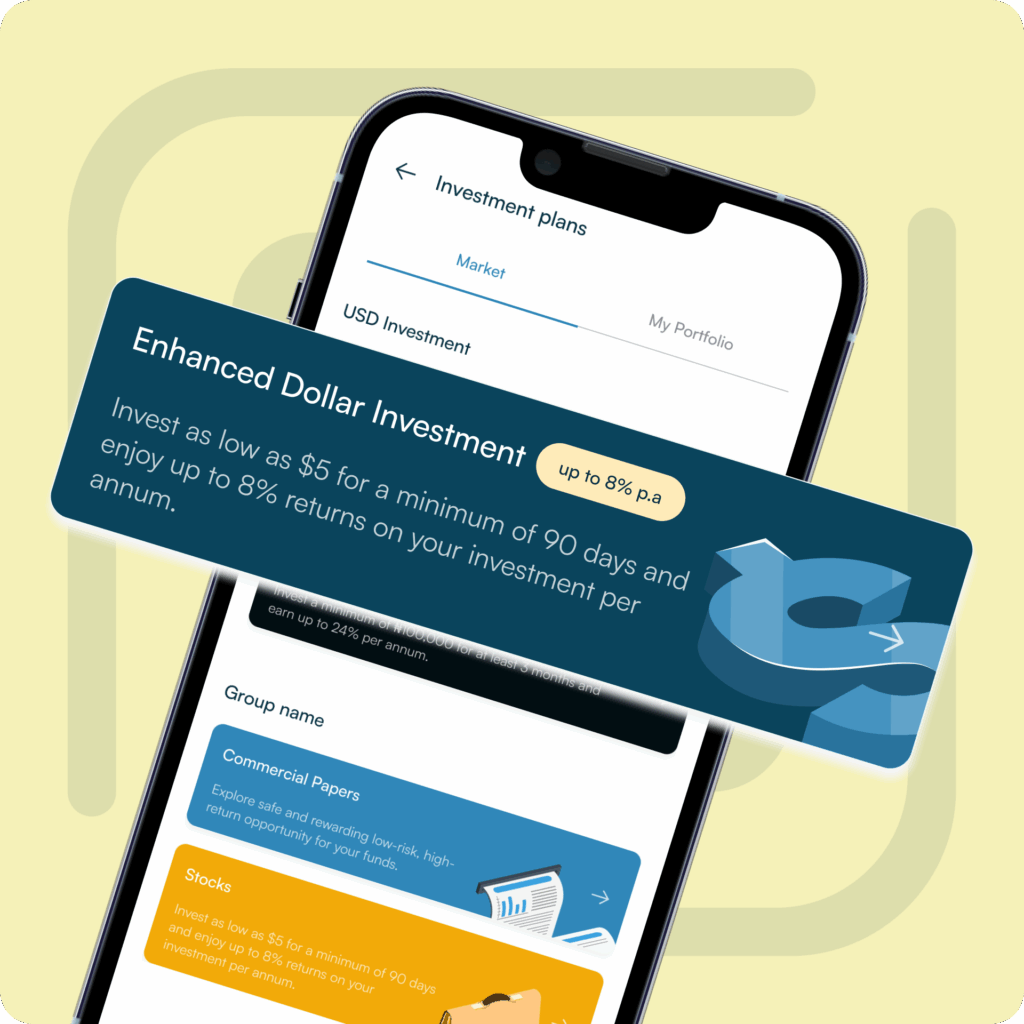
It offers USD-linked investment options that deliver the same kind of long-term protection Eurobonds provide without requiring you to leave your comfort zone or hire a financial consultant.
Take our USD Wallet, for example. It lets you store and grow your savings in dollars legally, locally, and securely. No need for Form A. No need for a domiciliary account. Just fund in naira and watch your returns track the USD.
And for those looking to earn passive income, our fixed-income plans offer naira entry with dollar-backed yields, giving you the best of both worlds: high returns, local simplicity, and global currency protection.
Here’s what sets Sycamore apart:
- You can start with as little as ₦100,000
- No legal grey zones, everything is SEC-compliant and transparent
- No FX drama, our systems are designed to eliminate the friction of traditional cross-border investing
Personal Snapshot: How Kemi Grew Dollar-Linked Returns Without Buying a Eurobond
Kemi, a 36-year-old HR consultant based in Abuja. Like many professionals earning in naira, she was feeling the pressure of rising costs, shrinking purchasing power, and the relentless drop in naira’s value.
Kemi had heard about Eurobonds and was interested in earning in dollars. She planned to invest $2,000 into a 5-year government Eurobond through a licensed broker. But the process quickly became frustrating: Form A delays, bank documentation back-and-forth, and the stress of sourcing FX at unpredictable rates.
Instead of shelving her investment plans, she looked for alternatives. That’s when she discovered Sycamore’s USD-linked fixed-income plan. With no need for a domiciliary account or Form A, she funded the plan in naira, converted to dollars and began earning returns pegged to the dollar.
Three months in, her investment started yielding steady returns. She reinvests every quarter, watching her funds grow, all while avoiding FX bottlenecks and international wire transfer stress.
Kemi didn’t need to bend over backward to protect her wealth. She simply found a local, legal, and low-barrier path that delivered what she wanted: dollar-linked growth with zero compliance headaches.
Try Sycamore’s fixed-income plan now.
Summary: What to Do If You Want to Invest in Eurobonds Legally
Let’s recap, not with a bullet list, but with clear steps that matter if you’re serious about foreign-currency investments from Nigeria.
First, define your goal. Are you looking for long-term, stable, dollar-based growth to hedge against naira depreciation? If yes, Eurobonds can be a smart fit. But only if you’re ready for the processes and risks that come with them.
Next, decide how you want to access them. If you have larger capital and patience for documentation, direct investment through a licensed broker gives you control.
If you prefer hands-off investing, consider Eurobond mutual funds managed by Nigerian asset managers. And if convenience tops your list, fintech platforms offering structured FX products might be a better match.
Just make sure every route is SEC-licensed, CBN-compliant, and transparent. Don’t cut corners, it’s your money, after all. But also ask yourself: is there a simpler path that gives you similar results?
That’s where Sycamore comes in. You can achieve dollar-linked returns without the stress of cross-border transfers, minimum thresholds, or FX bottlenecks. Whether you’re starting with ₦100,000 or ₦1 million, the doors are open.
Conclusion: Global Returns, Nigerian Simplicity
In a world where the naira continues to lose value and local investments feel increasingly uncertain, it’s no surprise you’re looking outward.
Eurobonds offer real benefits like dollar-denominated income, solid yields, and long-term stability. They’ve become a logical choice for Nigerians who want to protect and grow their wealth on a global scale.
With Sycamore, you don’t need to leave the country, or your comfort zone, to access dollar-linked returns. Whether through our USD Wallet or fixed-income plans, you get the stability and growth you’re looking for, without the red tape.
So if you’re ready to think global but move smart, skip the stress and start local. You already know where to begin.
Click here to download Sycamore and start investing smarter.