


Why Where You Put Your Money Matters More Than How Much You Save
It’s not just about how much you invest, rather it’s about where you place it. A poorly allocated ₦1 million can shrink before your eyes, while a carefully structured ₦500k spread across the right assets can quietly grow. The difference isn’t luck; it’s strategy.
That strategy has a name: asset allocation strategy. It’s the process of dividing your money across different asset classes such as cash, bonds, equities, and alternatives in a way that balances risk and maximizes potential returns.
Once you understand this, you’ll realize that the real engine behind wealth growth isn’t picking the perfect stock or timing the market but it’s designing a portfolio that cushions you when markets stumble and rewards you when they rise.
This post will show you exactly how to use various asset allocation strategies and the best platform you can employ like the Sycamore investment and Asset management.
The Core Idea of Asset Allocation
At its core, asset allocation is risk management in disguise. Instead of chasing returns blindly, you spread your money across different assets that don’t all move in the same direction. That way, when one investment stumbles, another cushions the fall.
Think about it this way: if you keep everything in a single basket, your outcome depends entirely on that basket’s fate. By spreading across multiple assets such as equities, bonds, foreign currency, and cash you create balance. One may dip, but another rises, keeping your overall portfolio steady.
In 2023, inflation in Nigeria hit about 28%. If you had kept all your savings in naira cash, your purchasing power would have been eaten away rapidly. But if you had split those funds, part in a naira-denominated investment, part in dollar holdings, and part in FGN bonds, the erosion would have been cushioned.
The bonds would pay steady returns, and the dollar portion would have grown in local value as the naira weakened.
That’s why asset allocation is less about predicting markets and more about protecting yourself from uncertainty.
With Sycamore MCY, you can apply this principle directly by converting part of your portfolio into USD, Euro, or Pounds. It’s a textbook allocation move that shields you from naira volatility while giving you the freedom to invest globally.
Understanding the Main Asset Classes (and What They Mean for You)
To design a strong allocation, you first need to understand the building blocks. Each asset class behaves differently. While some are built for growth, others for stability, and a few for protection. Knowing what they mean for you helps you combine them in a way that makes sense for your goals.
1. Equities (stocks and mutual funds) often get the most attention.
They offer the chance for outsized growth but come with volatility. If you invested ₦200,000 in Nigerian bank stocks during a strong policy year, you might see it double. But a policy shift or economic downturn could slash it in half just as quickly. Equities are exciting, but they demand patience and a stomach for swings.
2. Fixed income assets (Treasury Bills, FGN bonds, or commercial papers) play the opposite role.
They give you predictable returns with much lower risk. For example, a one-year FGN Savings Bond at around 15% might not make headlines, but it protects your purchasing power and keeps your money working.
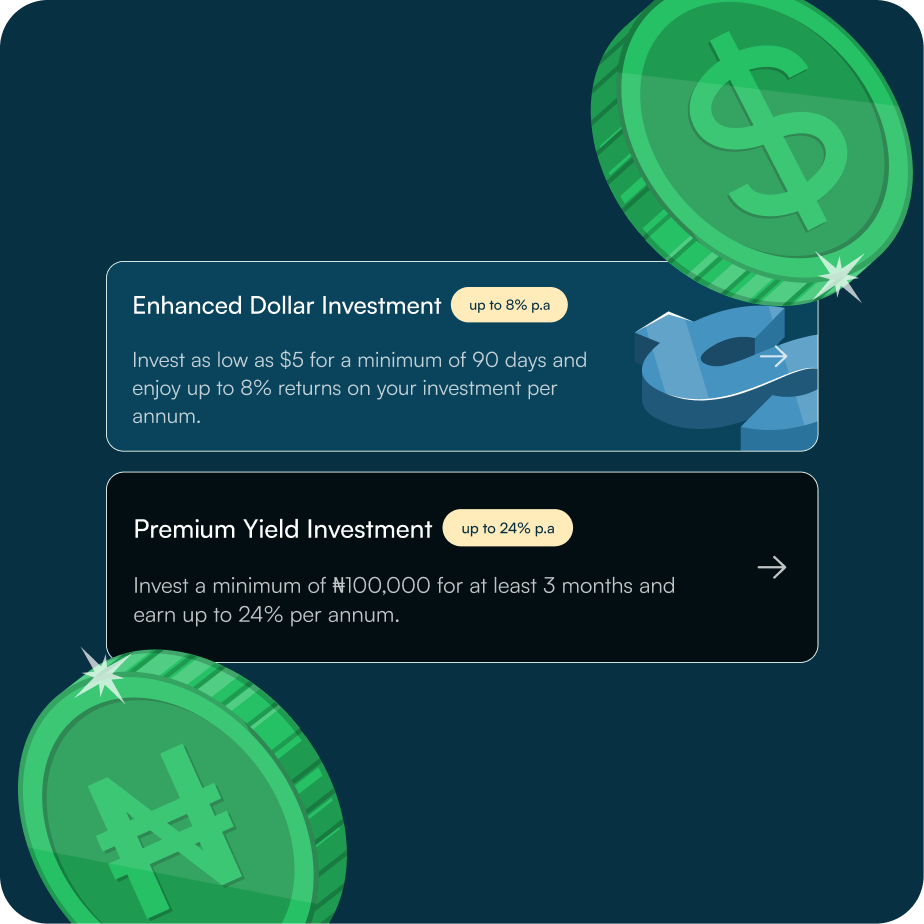
This is also where Sycamore fits naturally: with our Premium Yield Naira Investment, you can earn higher fixed-income returns locally, while the Enhanced Dollar Investment gives you access to USD-linked growth that hedges against naira depreciation.
3. Cash and cash equivalents (like money in your bank account, provide liquidity)
These are cash you can access anytime. But the trade-off is erosion risk. Leaving ₦500,000 in a non-interest account today is effectively watching inflation quietly eat into your wealth.
A smarter move would be to keep cash in a wallet balance that earns daily interest which is what Sycamore offers, so your idle money is at least growing instead of shrinking.
4. Then there are alternatives( real estate, commodities, or even crypto)
These can add spice to your portfolio, but they come with higher barriers and bigger risks. For instance, putting a small fraction into Bitcoin or tokenized real estate could pay off, but only if it’s kept as a small, calculated portion of your overall allocation.
When you see how each class behaves, you begin to appreciate the balance. Growth assets push your wealth forward, fixed income protects it, cash keeps you flexible, and alternatives offer upside if handled with care. The mix, not any single category, is what makes your allocation powerful.
How Asset Allocation Reduces Risk While Boosting Growth
The right asset allocation strategy lowers your chances of major losses while giving your money room to grow steadily.
This works because different assets don’t all rise and fall together. When one investment is under pressure, another often holds steady or even gains, smoothing out the ride.
Picture this: you split ₦1 million into four buckets such as ₦400k in bonds, ₦300k in equities, ₦200k in dollar investments(after converting from your naira to dollar), and ₦100k in a wallet balance that earns daily interest. If the stock market suddenly drops by 20%, your equities may lose ₦60k.
But your bonds are still paying steady returns, your dollar holdings have gained value as the naira weakens, and your wallet balance continues compounding quietly. The setback in one corner doesn’t drag down your entire financial picture.
This is why asset allocation matters even more in Nigeria. Inflation runs high, currency swings are constant, and markets can be unpredictable. Without balance, you’re either exposed to crushing losses or stuck watching your money lose value in “safe” accounts.
With balance, you position yourself to grow in the good times and survive the bad, and over the long run, that’s what builds real wealth.
The Role of Time Horizon and Risk Appetite
The right asset allocation isn’t the same for everyone because your age, your goals, and your comfort with risk all shape the mix. A 25-year-old saving for retirement in 35 years can afford to lean heavily on equities even if markets swing, they have time to recover.
But a 55-year-old approaching retirement doesn’t have the same luxury; protecting capital matters more than chasing big gains.
Your time horizon also determines how safe or aggressive you should be. If you’re planning for a major expense within the next few years like school fees, a wedding, or a house deposit you can’t afford to gamble with that money in volatile assets. Safer instruments like Treasury Bills or a disciplined savings plan make more sense.
Imagine a 30-year-old Lagos entrepreneur planning to buy a home in five years. Putting that money into risky equities or crypto might deliver short-term wins, but one market downturn could wipe out years of progress.
Allocating the bulk into short-term, stable instruments like government bonds or a structured savings plan would protect the goal while still providing modest returns.
That’s where tools like Sycamore Target Savings with up to 20% interest rate per annum come in. It allows you to set a timeline for your goal, earn high interest, and maintain the discipline of keeping your funds where they’ll actually serve their purpose, instead of risking them in assets that don’t match your horizon.
Risk appetite is equally personal. Some people can tolerate seeing their portfolio swing by 20% without losing sleep. Others panic at a 5% dip. Knowing your limits keeps you from making emotional decisions when markets move. Pairing your horizon with your risk comfort is what makes your allocation truly yours.
Building a Practical Asset Allocation Strategy in Nigeria
You can build a practical asset allocation strategy in Nigeria by defining your goals, assessing your risk appetite, and then splitting funds across Naira, Dollar, fixed income, and growth assets in proportions that match your needs. The process isn’t complicated, but it requires intentionality.
1. Set clear goals.
Are you saving for retirement, planning for your child’s school fees, or building a fund for business expansion? Each target needs a different allocation. Long-term retirement savings can handle more equities, while short-term goals need stability.
2. Know your risk level
If you’re comfortable with high risk, a larger slice in equities or alternatives may make sense. If you’re risk-averse, fixed income and cash equivalents should dominate your portfolio.
3. Diversify by currency
Keeping all your money in Naira exposes you to inflation and depreciation. Allocating a portion into USD or other strong currencies protects your wealth in a way local-only investments cannot.
4. Rebalance often.
Markets shift such as equities may grow faster than bonds, or your dollar holdings may outpace local returns. Rebalancing ensures you don’t drift into carrying more risk than you planned.
Let’s say Investor A has ₦2 million and a moderate risk appetite. A balanced split could look like this:
- 40% in Sycamore Premium Yield Naira Investment for strong local returns.
- 30% in Sycamore Enhanced Dollar Investment for currency protection.
- 20% in Treasury Bills, Bonds or Commercial papers for stability.
- 10% in Sycamore Wallet Balance, which earns daily interest while staying liquid.
This mix cushions inflation, hedges currency swings, and still leaves room for growth. It’s a practical allocation that thrives in Nigeria’s unpredictable financial climate.
How to Set Up your Investment on Sycamore App
Step 1: Download the Sycamore app from the Play Store or App Store.
Step 2: Create and verify your account. It takes less than 2 minutes.
Step 3– Fund your naira wallet (You can also convert your naira to USD for USD investment)
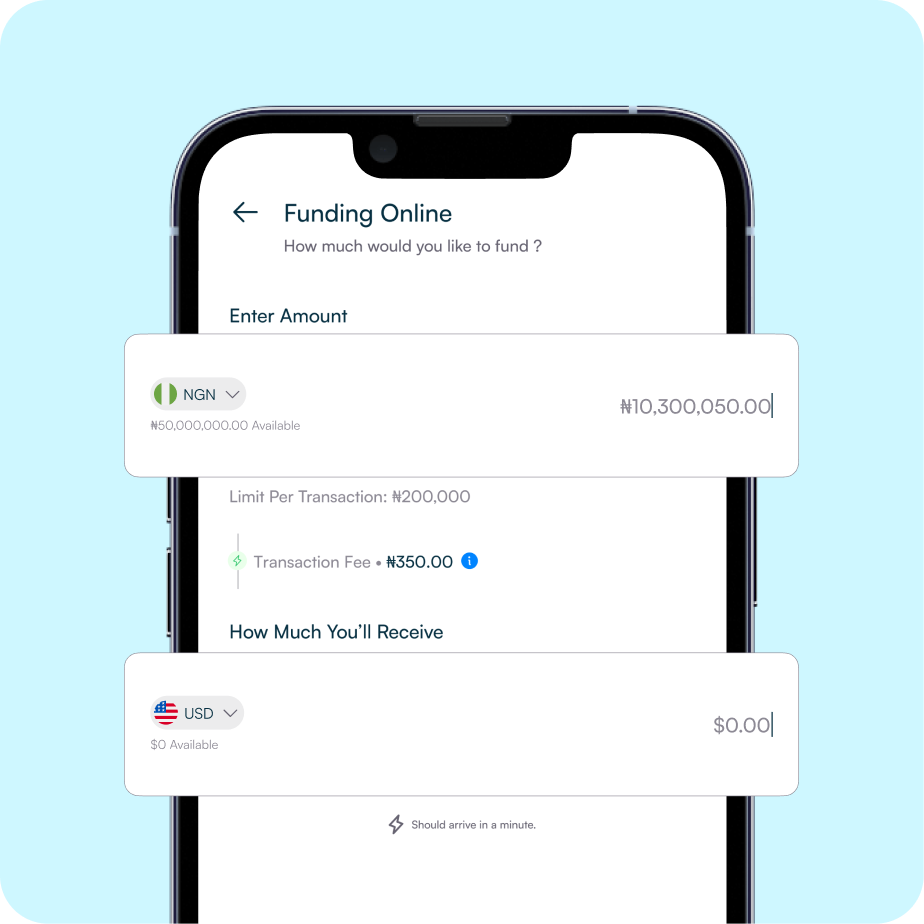
Step 4– Click the “Invest” button on your Sycamore app home screen
Step 5– Select either “Premium Yield Investment” , “Enhanced Dollar Investments”, Assets(Commercial papers, bonds), Stocks.
Step 6– Click “Add New Investment”
Step 7– Enter your investment name, amount( minimum of 100,000 Premium Yield Investment, $5 for Enhanced Dollar Investment,) and duration and click “Continue”
Common Mistakes Nigerians Make with Asset Allocation
The biggest asset allocation mistake is doing nothing at all, that is, leaving your money idle in one place.
Beyond that, there are a few patterns that keep showing up:
- Over-concentration: Many people put everything into land or a single savings scheme. While familiar, it leaves you vulnerable if that asset underperforms.
- Chasing returns: Jumping into trendy investments like crypto during a bull run feels exciting, but without balance, one downturn can erase years of savings.
- Ignoring FX exposure: Holding all your funds in Naira when your future expenses (like travel, tuition, or imports) are in dollars means you’re always playing catch-up with devaluation.
- Not reviewing regularly: An allocation that made sense 10 years ago may not fit today’s inflation or currency realities. Yet many Nigerians keep the same mix for decades.
For instance, during the 2021–2022 crypto bull run, countless investors went all-in without diversification. When the crash came, their portfolios lost 60–80%, while those with even a small allocation to fixed income or dollar assets had something to hold onto.
Note that “even if you “do nothing,” parking money in a Sycamore Wallet Balance ensures idle funds earn daily interest instead of sitting lifeless in a zero-yield account.” That small step already reduces one of the biggest mistakes investors make.
When and How to Rebalance Your Portfolio
Rebalancing means adjusting your portfolio back to your target allocation when market movements throw it off balance.
Over time, some assets will grow faster than others. That sounds good, but it also shifts your mix into unintended territory. If equities surge, they may suddenly dominate your portfolio, exposing you to more risk than you planned.
For example, let’s say you set your target allocation at 50% equities and 50% bonds. After a strong rally, equities now make up 70% of your portfolio. You’re no longer balanced because one market downturn could drag down most of your wealth.
Rebalancing means selling part of those equities and reallocating the gains into bonds, bringing your mix back to 50/50.
Imagine you invested $2,000 in Sycamore’s Enhanced Dollar Investment while also holding naira bonds. If the dollar strengthens significantly, your FX side may balloon compared to your local holdings. Rebalancing could mean trimming part of the dollar side and reallocating into naira assets to maintain your target mix.
Expert insight: for most individual investors, rebalancing once or twice a year is enough. It doesn’t have to be constant tinkering. The key is consistency, that is, setting guardrails and sticking to them so your portfolio stays aligned with your goals instead of drifting with market moods.
Final Thoughts: The Hidden Power of Balance
Asset allocation doesn’t make headlines. It’s not flashy, and it rarely feels as exciting as chasing the next hot stock. Yet quietly, it’s the discipline that has created more long-term millionaires than luck or speculation ever could.
Your real goal isn’t to predict markets but it’s to build a portfolio that thrives in good times and survives in bad. That’s what balance delivers. When you practice a disciplined asset allocation strategy, you stop gambling with your future and start designing it with Sycamore Investment and Assets Management.
So here’s the challenge: don’t just focus on what you can earn this year. Focus on building a mix that lets you sleep peacefully at night, knowing your money is working in the background.