


A lot of Nigerians only start thinking about retirement in their 40s or 50s, when the pressure is high, and the time is short. But if you’re in your 30s right now, you have something powerful on your side: time. According to a report, 53% of Nigerians aged 25–40 do not understand how pensions or long-term investments work.
This is your chance to build wealth quietly in the background, without the panic of catching up later. Starting early doesn’t require millions or complicated strategies but consistent action and a plan that matches your income, lifestyle, and long-term dreams.
This guide breaks down exactly how to start retirement planning in Nigeria in your 30s. Whether you earn ₦200k or ₦700k a month, you’ll learn where to invest, what tools to use, and how platforms like Sycamore NG help you stay consistent, without needing a financial degree or six-figure salary.
First Principles: What Does Retirement Planning Really Mean?
Retirement planning isn’t just about putting money aside but about building a future where you’re financially secure without needing to work.
At its core, retirement planning in Nigeria means creating income streams that will sustain your lifestyle long after your working years are over. This includes saving regularly, investing in long-term growth assets, and protecting yourself from risks like inflation, medical expenses, or currency devaluation.
And no, this isn’t only for high-net-worth individuals. If you’re earning today, whether you’re a salaried professional, business owner, or freelancer, you already have what you need to begin. Here’s what smart retirement planning typically involves:
- Consistent Saving: You put aside a portion of your income monthly, no matter how small.
- Long-Term Investing: You grow your money through safe, return-focused products like fixed income, mutual funds, or dollar-denominated tools.
- Risk Management: You account for life’s variables, things like health emergencies, inflation, and currency shifts, so they don’t derail your plans.
How Much Do You Need to Retire Comfortably in Nigeria?
Before you pick investments, you have to know the target you’re aiming for. A simple starting point is this: plan to replace roughly 60 to 80 percent of your final monthly income once you stop working.
That figure covers everyday expenses, healthcare, and the occasional treat, without forcing you back into full‑time employment.
Suppose you expect to earn ₦400,000 per month at age 55. Using the 60–80 percent guideline, you’ll want between ₦240,000 and ₦320,000 every month throughout retirement.
Stretch that over a 25‑year horizon, and you’re looking at ₦72 million to ₦96 million in today’s money.
But “today’s money” won’t be today’s value decades from now. Inflation erodes buying power, and the naira’s track record shows that prices rise faster than most salaries. If average inflation runs at, say, 10 percent a year, ₦100,000 today could feel like ₦25,000 in 25 years.
That’s why simply saving cash won’t cut it. You need growth assets and compounding returns to outrun inflation. A quick way to estimate your own target is to plug numbers into a free compound‑interest calculator (many fintech platforms, embed one on their dashboards).
How Starting in Your 30s Gives You the Biggest Advantage
The biggest asset you have in your 30s isn’t just your income but time. And when it comes to retirement planning, time is what turns small, consistent steps into serious wealth.
That’s because of compound interest, the process where your investment returns start earning returns of their own. The longer your money stays invested, the more it snowballs.
Let’s break it down with a practical example:
- If you start investing ₦30,000 per month at age 30, and earn a modest 12% annual return, you could end up with over ₦49 million by age 60.
- If you wait until age 40 to start saving that same ₦30,000/month under the same conditions, you’d end up with only about ₦22 million.
That’s a ₦27 million difference, simply because you gave your money more time to grow.
More time also means less pressure. Starting early allows you to invest small amounts and still meet your goals, compared to someone who starts late and needs to contribute far more just to catch up.
When you start retirement planning in your 30s, you’re not trying to “beat the market” or make huge, risky moves. You’re building a reliable system that works for you over time, so you can enjoy freedom later without stress now.
Where to Start Investing in Your 30s for Retirement
When you’re in your 30s, the goal is simple: build a retirement portfolio that grows steadily, survives inflation, and doesn’t demand too much of your time.
This section walks you through the key investment options that fit those needs, especially if you’re earning between ₦200k and ₦700k monthly and want a plan you can actually stick with. Let’s break down the smartest places to begin:
1. Fixed Income Products
These are low-risk investments that give you predictable returns. They’re perfect as the foundation of your retirement plan.
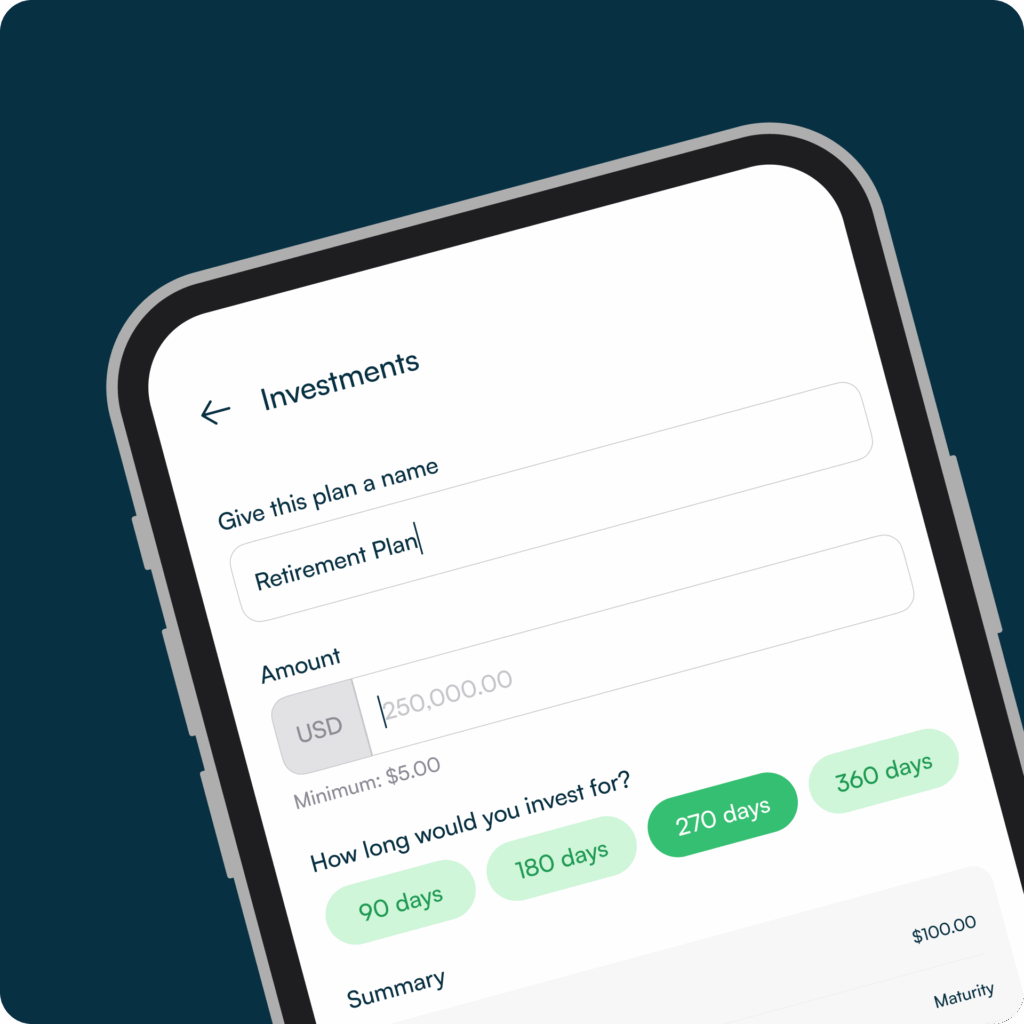
Think of FGN Savings Bonds, corporate bonds, or Sycamore’s Fixed Income Plans, which offer up to 27.5% per annum. These products generate regular interest great for compounding or reinvesting.
If you invest ₦100,000 monthly into Sycamore’s fixed-income plan for 10 years at an average of 20% per annum, you could build a portfolio of over ₦45 million, all without daily stress or market speculation.
Start building yours today, download Sycamore here.
2. Mutual Funds
Mutual funds pool your money with others and invest in various assets like stocks, bonds, money markets, based on a defined strategy. They’re managed by professionals, so you don’t have to worry about timing the market.
3. Dollar-Based Investments
If you’re concerned about naira depreciation, and you should be, then dollar-based products help protect your future income.
These include dollar mutual funds, Sycamore’s USD Wallet, or simply saving in a domiciliary account. Even small monthly allocations, like ₦10k or $20, can compound significantly over time.
4. Real Estate (Direct or Fractional)
You don’t need millions to start with real estate anymore. Through co-investment platforms or REITs (real estate investment trusts), you can invest in property fractionally. Look out for platforms that let you start with ₦50k–₦100k per unit and grow from there.
The Bottom Line? The most effective retirement portfolio combines low-risk assets, growth options, currency protection, and automation. And if that sounds like a lot to manage, tools like Sycamore exist to bundle several of these strategies into one accessible, time-saving platform, so you can build wealth without burning out.
What About Pensions?
If you’re a salaried worker in Nigeria, chances are you already contribute to a Retirement Savings Account (RSA) under the PENCOM-regulated Contributory Pension Scheme. But here’s what many professionals don’t realize: your pension alone may not be enough to secure the lifestyle you want post-retirement.
Let’s put it into perspective. Your employer and you contribute a combined 18% of your basic salary, housing, and transport allowance into your RSA. While that’s a helpful base, the reality is that pension caps are limited, and with inflation running wild, the real value of your pension might fall short by the time you retire.
That’s why forward-thinking professionals consider their pension a foundation, not a complete retirement plan.
Here’s how to strengthen that foundation:
- Voluntary Contributions: You can top up your RSA with extra savings. It’s flexible and can even be withdrawn partially before retirement (under certain rules).
- Micro Pensions: If you’re self-employed or work in the informal sector, this PENCOM initiative allows you to contribute at your pace, monthly, quarterly, or annually.
- Personal Retirement Plans: Independent of your RSA, you can build a retirement-focused portfolio with fixed income, mutual funds, and FX-backed assets, like Sycamore’s fixed-income products or USD wallet. These options offer higher flexibility and potentially better returns.
Automating Your Retirement Plan: How to Stay Consistent
One of the biggest reasons people fall behind on retirement planning isn’t lack of money but inconsistency. Life gets busy. Expenses pop up. And before you know it, another year has gone by without you contributing a kobo to your retirement goals.
That’s why automation is your best friend. Automating your retirement plan means putting your investments on autopilot, so saving becomes effortless and consistent, even when you’re not actively thinking about it.
Here’s how you can do it:
- Set up recurring transfers from your salary account to your investment wallets.
- Reinvest your returns automatically. If you earn interest from Sycamore’s fixed-income products or dividends from mutual funds, you can reinvest them without lifting a finger, boosting your compounding power.
- Use reminders or calendar blocks to review your plan quarterly. Even with automation, you still need to check in occasionally and make adjustments based on income changes or new financial goals.
Let’s say you earn ₦400k monthly. You automate ₦100k into Sycamore’s fixed-income plan, another ₦20k into a mutual fund, and ₦10k into your USD wallet. That’s ₦130k saved and invested consistently, without a single manual transfer.

By the end of the year, you’ve built a solid financial base and a disciplined habit, without even noticing the effort.
Story Snapshot: How Dapo Built a Retirement Plan Before 35
Dapo, a 32-year-old civil engineer living in Lagos, earned about ₦550,000/month.
Like many professionals, between site visits, client reports, and Lagos traffic, he barely had time to think about the future, let alone manage complex investments.
Still, Dapo had a goal: retire by 55 without depending entirely on his pension. Instead of overthinking it or waiting until he had “enough,” he took action with what he had. He created a simple, automated retirement plan:
- ₦100,000/month into Sycamore’s fixed-income plan (up to 20% p.a.). After 10 years, this alone could grow to ₦45 million+.
- ₦20,000/month into a balanced mutual fund (12% p.a.), which could reach about ₦4.5 million.
- ₦30,000/month into a USD wallet (8% p.a.), building over $7,000 (₦10 million+) in dollar assets.
By automating these steps in less than 30 minutes, Dapo transformed his salary into a ₦60 million+ retirement engine in just 10 years, without the stress of daily planning.
His secret? He started early, stayed consistent, and used smart platforms to do the heavy lifting.
You can do the same. Start today by downloading the Sycamore app and put your first ₦100k to work.
Common Mistakes Nigerians Make When Planning for Retirement
If you’re in your 30s and starting to think about retirement, that’s already a smart move. But many Nigerians, even well-meaning professionals fall into traps that can derail their long-term plans.
The common mistakes Nigerians make when planning for retirement are relying only on pension, waiting too long to start, ignoring inflation and currency risk, and saving without investing. Knowing these mistakes can help you avoid them.
1. Relying Only on Pension
Many people assume their RSA contributions will be enough. But pensions often don’t grow fast enough to match inflation or your retirement lifestyle goals. It’s a start, not the whole plan.
2. Waiting Too Long to Start
The later you begin, the more money you’ll need to catch up. For example, starting at 30 might require ₦30k/month to hit your target, but starting at 45 could mean needing ₦150k/month for the same goal. Time is your most valuable asset.
3. Ignoring Inflation and Currency Risk
₦1 million today won’t have the same value in 20 years. And with the naira constantly losing ground against the dollar, not planning for currency diversification is a major blind spot.
4. Saving Without Investing
Keeping money in a regular savings account won’t grow your wealth. After taxes, bank charges, and inflation, your money may actually shrink. You need interest-bearing or appreciating assets.
5. Not Having a Structured Plan
Guesswork doesn’t work. Without a clear plan; automated investments, scheduled reviews, defined goals; you’re just hoping for the best. Retirement requires strategy, not just good intentions.
Avoiding these pitfalls puts you ahead of the curve. The earlier you identify them, the easier it becomes to build a retirement plan that actually works.
Simple Monthly Investment Plan to Start Now
Retirement planning sounds complex until you break it into simple, actionable steps.
If you’re earning between ₦200,000 and ₦700,000 per month, you don’t need millions or a personal financial advisor to begin. You just need a consistent plan—and the discipline to follow through.
Here’s a sample monthly breakdown that balances growth, stability, and currency protection:
Product | Suggested Amount | Goal |
Sycamore Fixed Income | ₦100,000 | Stable long-term retirement growth |
Mutual Fund | ₦10,000–₦20,000 | Capital appreciation over time |
USD Wallet (e.g. Sycamore) | ₦10,000–₦30,000 | Hedge against naira depreciation |
Pension Voluntary Savings | ₦5,000–₦10,000 | Tax-friendly backup for retirement |
Conclusion: Start Small, Stay Consistent, Retirement Will Thank You
The truth is, your 30s are your biggest opportunity to shape the kind of retirement you want. You may not feel it now, but every naira you invest today carries the weight of time, and time is the greatest asset in wealth building.
You don’t need to be rich to start retirement planning in Nigeria. You don’t need complex spreadsheets or a personal financial adviser either.
What you need is a system that fits your income, aligns with your goals, and runs quietly in the background while you live your life.
With platforms like Sycamore, you can take real action, whether that’s investing in fixed-income plans, growing dollar-backed savings, or automating your monthly commitments.
Your future won’t wait. Download Sycamore today and start building your retirement plan.