


If you’ve ever found yourself scrambling for funds when life throws a big event your way; a relocation, wedding, or tuition deadline, you’re not alone.
Many Nigerians save money with good intentions but without a clear roadmap. The result? When that major milestone arrives, the money isn’t enough or it’s not there at all.
That’s where goal-based investing comes in. Instead of stashing money randomly and hoping for the best, you start with a specific dream, then build a financial plan to meet it.
Whether you’re aiming for ₦5 million to build your first home or planning a master’s degree abroad, goal-based investing helps you take control, reduce money stress, and grow your funds with intention.
In this article, you’ll learn how to align your savings and investments with your actual life goals using practical timelines, local platforms like Sycamore NG, and practical examples to make every step easy to apply.
What Is Goal-Based Investing and Why It Works Better

At its core, goal-based investing is exactly what it sounds like: investing your money with a specific, personal goal in mind.
Instead of just saving “for the future,” you create a clear target like ₦10 million for building a house in 5 years or ₦3 million for your wedding next year and structure your investments to meet that goal within the timeline you’ve set.
Here’s why this approach works better than vague or general saving:
First, it brings clarity and direction to your finances. You’re no longer guessing how much to save or where to put your money. You have a target amount, a deadline, and a strategy.
Second, it reduces emotional, impulsive decisions. When you’re saving just to “have money,” it’s easy to dip into it for any emergency or impulse spending. But when you know this money is for your child’s school abroad or your business capital, you treat it differently. That purpose adds discipline.
Third, it encourages diversification based on timelines. You’re not putting all your money into one pot. A short-term goal might use fixed-income plans, while a long-term one could include stocks or real estate. Each goal gets the investment type that suits its risk and time horizon.
Think of goal-based investing as putting your money to work with a job description. It’s no longer just sitting there but growing for something meaningful in your life.
Step 1: Define the Life Goal You’re Planning For
Before you even think about where to put your money, you need to know exactly what you’re investing for.
This might sound obvious, but many people skip this step, and it’s why their investment plans feel scattered or fall short when real needs come up.
Start by identifying a clear, personal milestone that you want to reach. For most Nigerians, common life goals include:
- Relocation or a “JAPA” plan
- Starting a business
- Buying land or building a house
- Wedding expenses
- A master’s degree (locally or abroad)
- Retirement prep or building a family safety net
Don’t just name the goal, put numbers and timeframes to it. That’s where the magic happens. Be specific about:
- How much you’ll need
- When you’ll need it
- Whether the cost might rise over time (due to inflation or exchange rate changes)
Once you define this, the rest of your investment strategy becomes clearer. You know how much to aim for and how long you have to build toward it.
Without this step, it’s like driving without a destination. You’ll move, but you won’t arrive anywhere meaningful.
Step 2: Categorize Your Goal by Timeline and Risk Level
Once you’ve defined your goal, say, ₦10 million for a UK master’s in three years, the next step is figuring out how much risk you can afford to take based on your timeline.
This helps you avoid one of the most common mistakes in investing: picking the wrong product for your timeframe.
Here’s how to break it down:
Goal Type | Timeline | Risk Tolerance |
Short-term | Less than 1 year | Low risk only |
Medium-term | 1–3 years | Moderate risk |
Long-term | 3+ years | Can handle more volatility |
Why does this matter?
Because the longer you have until you need the money, the more risk you can take, since there’s more time to recover from any short-term losses.
Conversely, if your goal is just a few months away, you can’t afford to gamble. You need your capital to be safe and available.
Short-term goals like planning a wedding next year or paying for WAEC fees require stability. Think low-risk, fixed-income options.
Medium-term goals like saving for a master’s program in 2–3 years can tolerate a bit of market movement. You can use a blend of secure and growth-focused assets.
Long-term goals like retirement in 10 years or building a home in 5 years, give you room to invest in higher-yield, long-term instruments like equity mutual funds, real estate, or even dollar-denominated assets.
Step 3: Match Investment Options to Each Goal
Now that you’ve defined your goal and timeline, it’s time to put your money to work strategically.
The key is simple: match each goal to an investment product that fits both the time frame and your risk appetite.
This section breaks down what works best for short-term, medium-term, and long-term goals, with real, accessible options.
1. Short-Term Goals (Less Than 1 Year)
When you’re less than a year away from needing the money, say for a wedding, travel deposit, or school fees, safety is everything.
The focus here is preserving capital and earning a predictable return.
What to use:
- Fixed-income plans
- Money market mutual funds
Platforms like Sycamore NG offer fixed return investment plans with durations ranging from 3 to 12 months. You know upfront how much you’ll earn, and your money is tied to real Nigerian businesses.
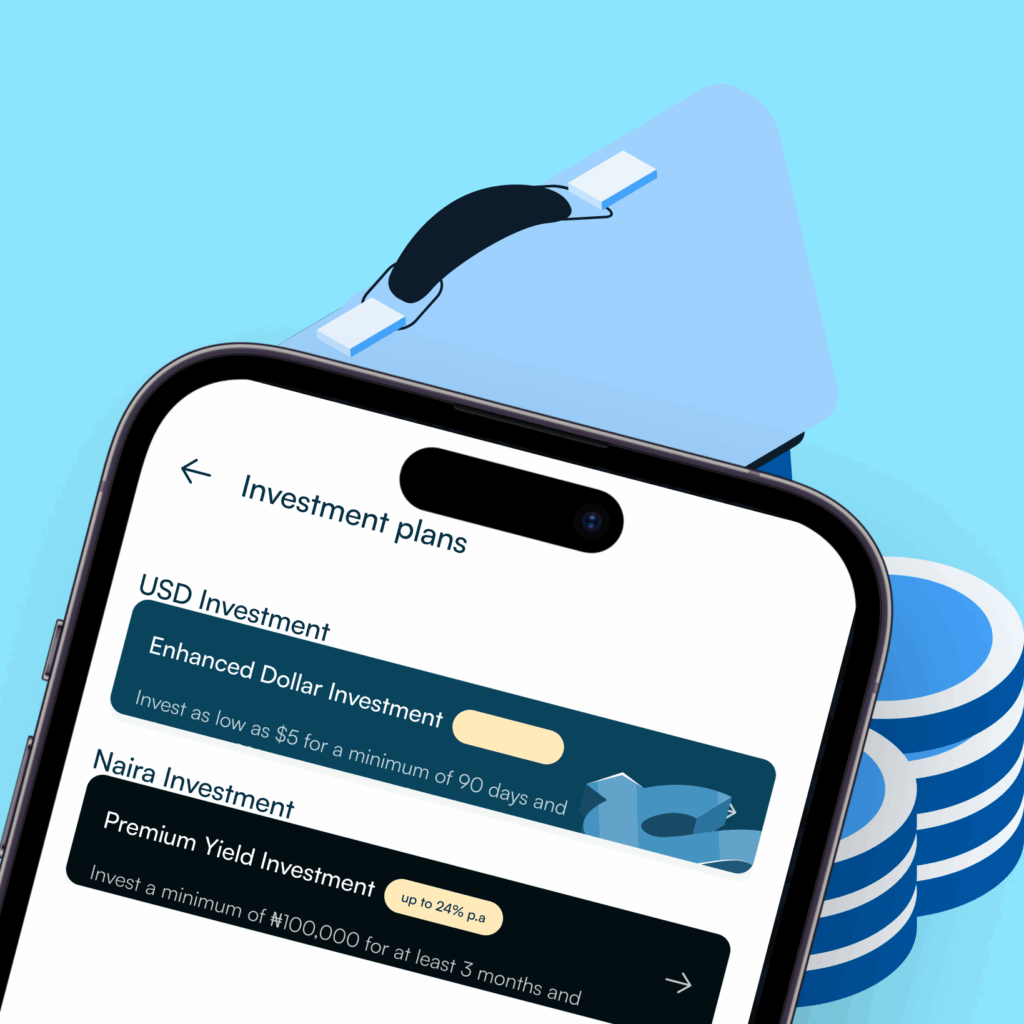
Plus, with minimums as low as ₦100,000, you can start small and stay flexible.
Why it works:
- Your capital stays protected
- Payouts can match up with your expected expenses
- No surprises, just steady income
2. Medium-Term Goals (1–3 Years)
For goals like a postgraduate program, business expansion, or relocation plans, you want a bit of growth, but still some stability.
What to use:
- Corporate notes and government bonds
- Balanced mutual funds
- Fintech fixed-income platforms
A smart mix might look like this:
- A portion in Sycamore’s fixed return plans for stable income
- Another portion in a balanced mutual fund on Cowrywise or ARM for modest growth
- Possibly, government bonds like FGN Savings Bonds that pay quarterly returns
Why it works:
- Offers both income and capital appreciation
- Balances risk across asset types
- Allows you to adjust yearly as your goal gets closer
3. Long-Term Goals (3+ Years)
This is where you can be a little more aggressive. If your target is to build a home, retire early, or fund your child’s international education in 5 years, your investments need to beat inflation and build wealth over time.
What to use:
- Equity mutual funds
- Real estate or fractional property investments
- Dollar-denominated plans
You could use platforms like Rise or Trove for stock and dollar asset exposure. For real estate, fractional options via REITs or co-investment prop-tech platforms let you invest without needing ₦10 million upfront.
Also, dollar-based plans, like the dollar wallet offered by Sycamore NG,
protect your capital from naira depreciation while offering steady ROI.
Why it works:
- You’re investing with time on your side
- Higher returns become realistic
- Dollar exposure adds currency protection
Bottom line: Your money should reflect your timeline. Each goal deserves its own mix, there’s no one-size-fits-all.
Use tools like Sycamore NG to structure and automate your plans across durations, so each goal grows at the pace it deserves.
Automate and Track Your Investments
Planning your investment is only half the battle, consistency is what makes it succeed. That’s why automation isn’t just a convenience; it’s a strategy.
When you automate your contributions, you remove the friction of having to decide every month whether to save or invest. Instead, your goals move forward on autopilot.
Start by setting up standing orders with your bank or enabling automated deductions within investment platforms like Sycamore NG or Cowrywise.
For instance, with Sycamore NG, you can allocate a specific amount monthly into fixed-return investment plans, tied to your life goal’s timeline, whether that’s six months or three years.
This kind of structure builds discipline. You’ll never forget to invest, and over time, even small amounts compound into something significant.
But automation alone isn’t enough. You also need to track your progress. Every six months, take time to review:
- How much you’ve contributed
- The current value of your investment
- Whether the returns are on track to meet your goal
- If your income or financial situation has changed
If you’ve received a salary increase or closed a new contract, consider bumping up your monthly contributions.
If life throws a curveball, like unexpected expenses, you might need to adjust your goal’s timeline or switch to a safer investment product.
Real-World Example: How Tunde Saved for His Master’s Abroad
Let’s bring this home with a story you can relate to. Tunde, a 27-year-old software developer living in Port Harcourt, had a clear dream: earning a master’s degree in Canada within three years.
The total cost, including tuition, visa, travel, and living expenses, was ₦8 million. It was a big goal, but he knew it wouldn’t happen through saving alone.
Instead, Tunde built a structured goal-based investment plan. He broke the ₦8 million into manageable monthly targets and began allocating his income intentionally:
- ₦100,000/month into Sycamore NG’s fixed-income plan for predictable quarterly returns.
- ₦50,000/month into a dollar savings account to hedge against naira depreciation.
- ₦30,000/month into equity mutual funds to capture market growth.
He automated everything, so contributions left his account before he could even think about spending them.
Over three years, this disciplined system compounded beautifully. The mix of stable fixed-income returns, dollar protection, and equity growth added up to over ₦9.2 million, more than enough to cover his program, visa fees, and flight tickets without borrowing a single kobo.
As Tunde puts it:
I stopped looking at the ₦8 million as a mountain. I broke it down into chunks, automated the process, and let the system work. Three years later, the money was sitting right there.
You don’t need to wait for the “perfect time” to start. Begin with what you have today.
With Sycamore NG, your ₦100,000 can be the first step toward funding your own big goal, whether it’s education, retirement, or financial freedom. Download the Sycamore app here to get started.
Common Pitfalls in Goal-Based Investing (And How to Avoid Them)
Even with the best intentions, goal-based investing can go off track if you fall into avoidable traps.
These aren’t just beginner mistakes but errors that many smart people make when they don’t align their strategies with their goals.
The common pitfalls in goal-based investing are Ignoring Inflation and Currency Risk, Choosing the Wrong Product for Your Timeline, No Progress Tracking, etc.
Let’s walk through the most common ones and how to steer clear of them.
Mistake 1: Ignoring Inflation and Currency Risk
If you’re saving for a ₦5 million goal in three years, and inflation averages 20%, that money won’t be worth as much when you need it.
For goals like international education or relocation, currency depreciation makes it worse.
You can avoid it by choosing investment options that grow faster than inflation like balanced mutual funds or dollar-based savings.
Platforms like Sycamore NG offer dollar-denominated returns that protect your value in the long run.
Mistake 2: Choosing the Wrong Product for Your Timeline
Investing in stocks for a wedding that’s six months away? Or putting all your retirement savings in a fixed deposit? That’s a mismatch.
The wrong product exposes you to unnecessary risk or limits your growth. Use your timeline as your guide. Short-term = low-risk. Long-term = more growth potential.
Refer back to the goal-timeline-risk table in Section 4 whenever in doubt.
Mistake 3: No Progress Tracking
Many people invest once, then forget to check back, until the goal is near, and they realize they’ve missed the mark.
Set a reminder every six months to review your progress. Use platforms that let you set and track goals automatically, Sycamore NG and Cowrywise make this super easy.
Mistake 4: Putting All Your Eggs in One Basket
Relying solely on one platform, one asset type, or one currency is risky.
One market downturn or platform failure could jeopardize your whole plan. Diversify across different tools and asset classes.
Pair fixed-income with equity. Mix naira and dollar plans. Use more than one trusted platform. You’re not just investing, you’re building a safety net.
Conclusion: Invest Like You Mean It Because Your Goals Deserve It
Big dreams need more than just wishful thinking, they need a plan backed by action.
If you’re serious about that master’s degree, buying your own home, or relocating abroad, saving aimlessly won’t cut it. You need to treat your goal like a project, not a possibility.
Goal-based investing helps you do exactly that. You start by being clear on what you want, when you want it, and how much it’ll cost. Then you match the right financial tools to that timeline, whether it’s fixed income plans for short-term certainty, or equity and dollar investments for long-term growth.
And the beauty is, you don’t need to be a financial expert to do this. Platforms like Sycamore NG make it simple to automate your contributions, choose your return timelines, and track your progress, all in one place. Start diversifying today with Sycamore NG.