


If you’re serious about relocating from Nigeria, whether it’s for studies, work, or a fresh start, then saving in naira could be the first thing that sabotages your plans. Every few months, you watch the naira lose more ground against the dollar.
Now, you’ve probably heard that to hold dollars, you need a domiciliary account. But the paperwork, delays, and minimum balance requirements make that route unrealistic for many. A 2024 SBM Intelligence Report revealed: 40% of them do not have a domiciliary account but use fintech platforms or peer-to-peer methods.
That’s where this guide steps in. You’re going to learn exactly how to save in dollars for relocation from Nigeria without ever opening a domiciliary account.
We’ll walk through legit, smart alternatives that work in today’s economy, including options like Sycamore NG and other trusted platforms that let you protect your hard-earned savings from the naira’s free fall.
Why Dollar Savings Are Crucial for Anyone Planning to Relocate
When you’re planning to relocate, every major cost you’ll face, visa application fees, proof of funds, school deposits, even your flight ticket is quoted in dollars. And that’s not by accident.
The entire relocation ecosystem is built around USD, which means you’re not just saving for a goal, you’re saving in a currency that actually holds the value of your goal.
But here’s the real problem: naira volatility doesn’t just erode your savings; it delays your timeline and increases your overall cost.
Let’s say you were planning to relocate in 18 months and you started saving ₦3 million in early 2022. By early 2023, that same ₦3 million had lost a huge chunk of its dollar value due to rapid exchange rate changes. What could have covered visa fees and a tuition deposit now might not even pay for one.
Why does this matter so much? Because relocation is time-sensitive. Schools have deadlines. Embassies process in batches. Your proof of funds has to show up at the right moment. If you’re saving in naira while prices keep rising in dollars, you’re chasing a moving target.
Dollar savings aren’t just a smart financial move but a way to lock in your progress. They act as a hedge, protecting your money from inflation and allowing you to stay in control.
So when it’s time to pay that school deposit or book your flight, you’re not scrambling to convert naira or pay black-market premiums. You’re ready.
Common Challenges With Traditional Dollar Saving Methods
If you’ve ever tried opening a domiciliary account in Nigeria, you already know it’s far from straightforward. What sounds like a simple bank process quickly becomes a marathon of forms, fees, and frustrating roadblocks.
Most banks require a minimum of $100 to $500 just to open the account. That’s before you even start saving.
Then there’s the paperwork. You’ll need multiple valid IDs, passport photos, utility bills, BVN verification, and in some cases, two referees with existing dom accounts at the same bank.
Even after jumping through those hoops, transfers can take days, with hidden charges quietly eating into your funds.
For most young professionals planning a Japa move, especially those earning in naira, this system isn’t just outdated. It’s inaccessible.
You’re expected to provide foreign currency upfront when your income is in naira, and at a time when sourcing legitimate FX is harder than ever. Add unpredictable transfer fees, long transaction windows, and limited digital control, and what you’re left with is a slow, rigid system that doesn’t reflect your real needs.
That’s why many people delay or avoid dollar savings altogether because the traditional options feel locked behind unnecessary barriers.
But as you’ll see next, there are easier, safer ways to save in dollars for relocation from Nigeria, and they don’t require stepping into a bank or waiting in line for approval.
Legal, Easy Alternatives to Save in USD Without a Dom Account
You don’t need a bank’s permission to start saving in dollars anymore. Thanks to modern fintech, there are now legal, accessible tools designed specifically for people like you, Nigerians planning their Japa move who want flexibility, speed, and control over their savings.
The legal and easy alternatives to save in USD without a dom account are Dollar-Backed Wallets on Fintech Platforms, Dollar Mutual Funds, Stablecoin Wallets, etc. Let’s walk through some of the most reliable alternatives that help you hold USD without a domiciliary account:
1. Dollar-Backed Wallets on Fintech Platforms
One of the easiest and most direct ways to save in dollars today is through fintech apps like Sycamore NG.
These platforms offer USD wallets that are fully digital, meaning you don’t need to visit a bank or submit heavy documentation. With just your BVN or NIN, you can sign up and start saving in a dollar-backed wallet.
What makes this powerful is that you’re not just holding dollars but you can also invest in dollar-denominated fixed-return plans. Sycamore NG, for example, offers up to 6–8% annual returns in USD. This not only protects your savings from naira devaluation but also grows your relocation fund steadily.
You can also automate monthly contributions using Sycamore’s Target Contribution feature. It helps you stay consistent without the stress of manual transfers.
2. Dollar Mutual Funds
If you’re looking for something more structured but still simple, consider dollar mutual funds from platforms like Rise, Cowrywise, or ARM. These investment products pool your money with others and invest in foreign fixed-income assets, typically bonds or treasury bills in USD.
They’re ideal for medium- to long-term goals (1–3 years), which aligns well with most relocation timelines.
Unlike volatile assets, these funds are relatively stable, and you can track your portfolio through a mobile app or dashboard.
3. Stablecoin Wallets (With Caution)
You’ve probably heard of USDT or USDC. These are stablecoins: cryptocurrencies pegged 1:1 to the US dollar. Apps like Yellow Card and Bitnob make it easy for Nigerians to save in these digital dollars.
The appeal? Fast transactions, minimal fees, and no need for a dom account.
But here’s the caution: while the value is tied to USD, stablecoins still operate in the crypto ecosystem, which means you’re exposed to platform risk, regulatory uncertainty, and sometimes liquidity issues.
Only go this route if you truly understand how crypto wallets work and are ready to manage the risks.
4. Eurobond Access via Apps
Another advanced but secure option is investing in Eurobonds, USD-denominated government or corporate bonds. You earn returns in dollars, and your capital is relatively safe if you hold to maturity.
This is perfect for long-term planners looking to preserve capital and earn interest over 2–5 years.
Each of these alternatives offers a legal, user-friendly way to save in dollars for relocation from Nigeria, giving you more power to plan your move without being held back by banking bureaucracy or FX instability.
Up next, we’ll walk through how you can get started today with no domiciliary account needed.
How to Start Saving in Dollars Today (No Dom Account Needed)
Starting your dollar savings journey doesn’t have to be complicated. In fact, once you know the right tools to use, it’s something you can set up in less than an hour. You don’t need to visit a bank, fill out long forms, or wait days for approval.
Here’s how to begin step by step with real tools that work in Nigeria today.
Step 1: Choose a trusted fintech platform.
Go with platforms that are transparent, regulated, and offer digital dollar-backed wallets.
Sycamore NG is one of the most trusted, offering you options to save and invest directly in USD without any hidden complexity.
Others like Rise or Cowrywise also have verified dollar-based savings products.
Step 2: Sign up and verify your account.
Most platforms require just your NIN, BVN, or a valid government-issued ID.
This helps secure your account and link your profile to real-time financial data, ensuring a smooth onboarding experience.
Step 3: Fund your wallet in naira.
You don’t need to source dollars from a black market operator. Just fund your wallet using your regular naira bank account.
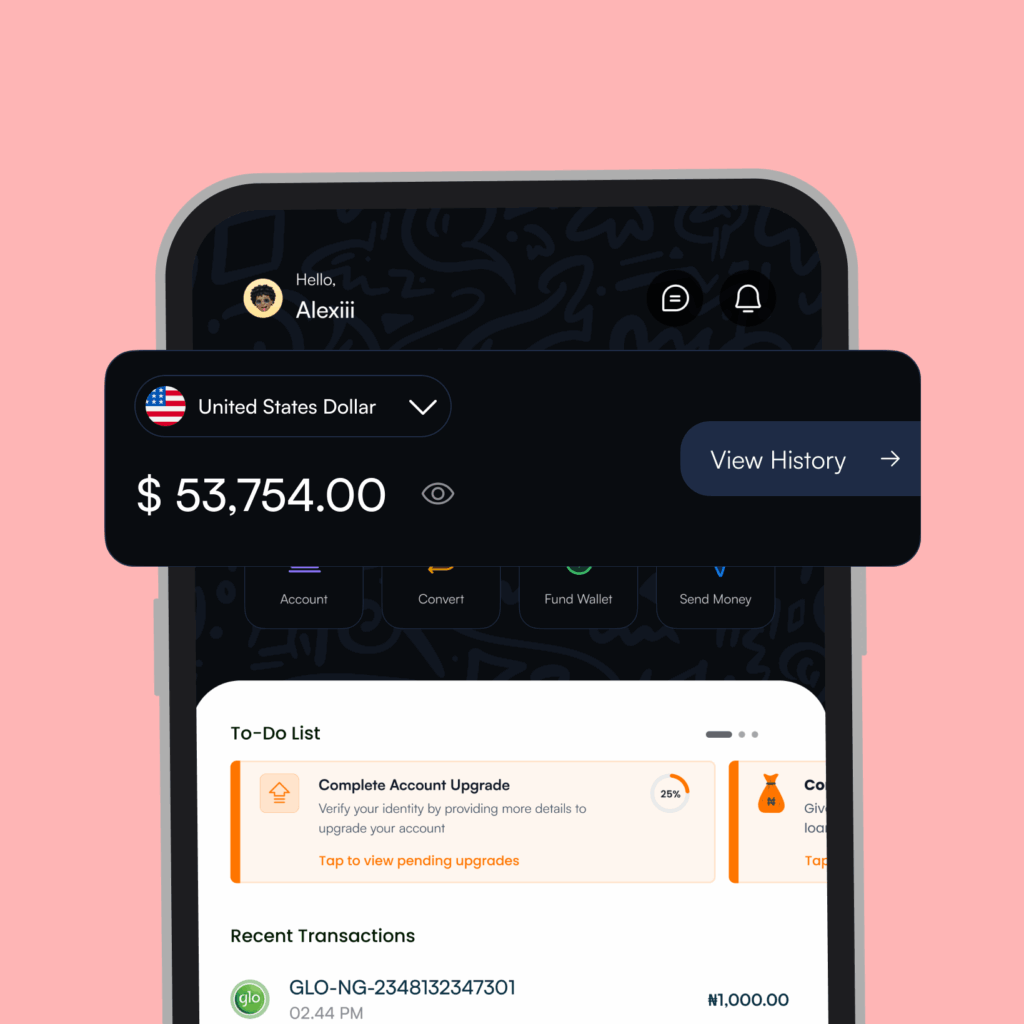
With platforms like Sycamore you can easily convert your naira to dollars at real-time rates, removing the usual friction and delays you’d face with a traditional bank.
Step 4: Choose how you want to hold the dollars.
You can either:
- Keep your funds in a simple dollar wallet for easy access.
- Lock them in a fixed return investment with annual USD returns.
- Allocate into a mutual fund if your target is medium- to long-term.
The right choice depends on how soon you’re planning to relocate. If your timeline is under a year, a flexible wallet or fixed plan may be best. If it’s 2–3 years out, mutual funds or even Eurobonds may suit you better.
Step 5: Set your goal and automate your savings.
Use tools like Sycamore’s Target Contribution to set a monthly savings amount. Automating your deposits ensures you stay on track, even when life gets busy.
Real Story: How Ada Built Her Japa Fund Without a Domiciliary Account
When Ada, a 29-year-old nurse based in Benin City, decided to relocate to the UK, she knew that saving in naira wasn’t going to cut it. She’d seen friends lose value on their savings almost overnight due to rising exchange rates.
So instead of following the traditional route of opening a domiciliary account, which would have meant finding referees, visiting a bank multiple times, and figuring out how to fund it, she took a different path.
Ada signed up with Sycamore NG. With her BVN and ID, she completed the onboarding process in less than 20 minutes.
She started with an initial ₦500,000 investment, then added ₦100,000 every month, converting each deposit to her dollar wallet within the app and earning up to 8% returns per annum.
Within 14 months, Ada had grown her savings to just over $2,000. That amount might not sound massive to some, but for her relocation plan, it covered her visa application, NHS surcharge, and part of her tuition deposit, all without borrowing or scrambling for black market dollars at the last minute.
What’s more important? Ada didn’t have to risk her money with crypto apps she didn’t understand. She didn’t need a dom account. She didn’t fall for fake dollar “investment” schemes. She used a regulated, practical tool that gave her peace of mind and results.
Start building your own success story. Download the Sycamore app today and grow your savings in dollars with competitive, fixed returns.
How Much Should You Be Saving Monthly in USD?
This is one of the most important questions you need to answer early in your relocation journey, how much do you actually need to save, and how should you break it down monthly in dollars?
The truth is, there’s no one-size-fits-all figure, but there’s a smart way to work it out based on your destination, timeline, and visa category.
If you’re relocating to the UK or Canada, you should aim to have between $3,000 and $10,000 saved up.
This covers the essentials: visa processing, flight tickets, proof of funds, tuition deposit (if you’re a student), and basic setup costs once you land. The closer you get to that range, the more financially prepared and confident you’ll be.
Here’s a basic breakdown:
- Visa and IELTS/TOEFL tests: ~$1,000
- School deposit (for study route): ~$3,000–$5,000
- Flight, accommodation deposit, and airport transfers: ~$1,000–$2,000
- Buffer (just in case money): ~$1,000
That’s your big-picture goal. But how do you hit that target in naira without getting burned by currency fluctuations?
Start with your timeline. If you plan to relocate in 18 months and you’re targeting $5,000, you’ll need to save about $280 per month.
Convert that to naira using the current fintech platform rate at the time of saving, not at the end. Why? Because waiting to convert later leaves you exposed to FX volatility, if the rate worsens, you’ll need more naira to buy the same dollars.
Using a platform like Sycamore NG, you can automate this monthly savings goal and track your progress in real time. The goal isn’t just to hit a number; it’s to make sure your money will actually work for you when the time comes.
Common Pitfalls to Avoid When Saving in USD
When you’re trying to save dollars for relocation from Nigeria, it’s not just about finding the right tools but also about knowing what to stay away from. One wrong move can set you back months or even cost you everything you’ve saved.
The common pitfalls to avoid when saving in USD are Using black market dealers with no digital trace, Putting all your funds into volatile crypto wallets, Falling for Ponzi dollar “investment” schemes, etc. and more importantly, how you can avoid them:
Using black market dealers with no digital trace
Sure, the black market might offer you a slightly better rate today, but it also comes with major risks. No receipts. No accountability. No legal backing.
If anything goes wrong like your cash not being delivered or getting scammed, you have no way to recover your funds. And in the context of relocation, every dollar counts. Stick with platforms that have digital transaction history and proper registration.
Putting all your funds into volatile crypto wallets
Cryptocurrencies like Bitcoin or even stablecoins like USDT may seem like a shortcut to dollar savings, but without understanding the market, you could lose more than you gain.
Platforms crash, wallets get frozen, or worse, you get caught in a phishing scam. If you’re not crypto-savvy, it’s smarter to use dollar-backed apps or mutual funds where your capital is more secure.
Falling for Ponzi dollar “investment” schemes
If someone promises you 20% returns in dollars every month, run. These schemes often disguise themselves as “fast-track savings” or “crypto-backed dollar platforms,” but they’re not regulated and rarely sustainable.
Many people looking to fund their Japa dreams have fallen victim to scams that wiped out years of savings in weeks.
Ignoring exchange rate fluctuations and platform FX policies
Not all platforms offer real-time conversion or transparent exchange rates. Some hold your naira for days before converting, exposing you to rate changes that eat into your savings. Always check the platform’s FX handling terms before depositing.
With Sycamore NG, for instance, you can fund in naira and get immediate conversion to dollars, locking in your value on the spot.
You Don’t Need a Domiciliary Account to Save in Dollars
Let’s cut through the noise: if your relocation dream depends on opening a domiciliary account, you’re already at a disadvantage.
Banks have made it unnecessarily hard to get started, just when you need speed, control, and certainty the most.
The good news? You now have smarter, safer, and easier options to save in dollars for relocation from Nigeria.
Platforms like Sycamore NG have completely changed the game. With digital dollar wallets, automated savings plans, and dollar investment opportunities, all without the red tape, you can skip the bureaucracy and build real financial momentum.
You don’t need a domiciliary account. You need a plan, and you already know how to start.