


Introduction: Why Holding Only Naira is a Dangerous Game
Between 2020–2024, more than 50 currencies around the world experienced double-digit depreciation against the U.S. dollar due to inflation and interest rate hikes. In the past three years, the Naira has lost more than half its value. For many households, what used to buy a bag of rice now barely buys half.
You don’t need a finance degree to feel this erosion because you see it every time you step into the market, pay school fees, or budget for fuel.This is why protecting your wealth isn’t about working harder; it’s about being smarter with the currencies you keep. The reality is that your money should not be tied to the fate of one fragile currency.
A multicurrency savings strategy gives you a lifeline by placing part of your wealth in stronger currencies like the dollar, euro, or pound, so your money holds value even when the Naira falls. In this article we will guide you through various currency diversification strategies with fintechs like Sycamore.
What Currency Diversification Really Means
At its core, currency diversification isn’t about chasing profits or speculating on forex. It’s about protection. Think of it as spreading your money across different baskets so that if one collapses, the others hold you up.

In practice, a currency diversification strategy means keeping part of your money in Naira, and part in stronger foreign currencies like USD, Euro, or Pounds.
Let’s put this into perspective. Imagine you had ₦1 million in 2022. If you left all of it in Naira, by 2023 inflation and devaluation would have slashed its real value after the removal of fuel subsidy in Nigeria.
But if you had kept half of that in USD, the Naira half may have lost value, while the USD half would have appreciated significantly when converted back. One simple split could have shielded your wealth from being eroded completely.
And this isn’t just a strategy for importers or exporters. Everyday savers can protect household budgets. Freelancers earning from international clients can retain part of their earnings in forex for stability. SMEs buying foreign raw materials or paying for digital tools also benefit from having reserves in multiple currencies.
The point is simple: you don’t diversify to gamble on exchange rates but rather, you diversify to survive them.
Why a Multicurrency Savings Strategy Matters in Nigeria
Currency diversification is survival in an economy with high inflation and volatile exchange rates. Nigeria’s economic reality makes a multicurrency savings strategy less of an option and more of a necessity.
Inflation eats away at the value of your Naira month after month, while currency volatility means the cost of anything linked to imports can skyrocket without warning.
Holding stronger currencies like USD or Euro acts as an inflation hedge. Even when the Naira weakens, your dollar savings maintain their purchasing power. This is why parents paying international school fees or entrepreneurs importing raw materials often feel the sting when they rely solely on Naira because one bad exchange rate swing can wipe out months of planning.
It’s also about access. By setting aside forex in advance, you avoid the stressful scramble of rushing to black-market dealers last minute. Anyone who has had to pay for a supplier abroad or settle tuition knows that waiting until the eleventh hour means paying inflated rates. Having the funds ready saves both money and peace of mind.
And then there are your global needs. Whether it’s subscribing to a $99/month software tool, paying a supplier in China, or sending upkeep to a child abroad, having part of your wealth in foreign currency makes those transactions seamless.
The lesson is clear: in Nigeria, failing to diversify isn’t just risky but it’s also expensive. Those who prepare with a multicurrency savings plan stay ahead, while those who don’t are left reacting under pressure.
Practical Ways to Diversify Your Currency Holdings
Start small by splitting your savings between Naira and at least one foreign currency like USD. The good news is that you don’t need millions or a complicated setup to begin diversifying. What matters most is choosing the right channel for your needs.
For many Nigerians, the first stop is a domiciliary account. While traditionally, this option often feels rigid and costly. Banks typically demand high minimum balances, paperwork, and fees that make it unfriendly to smaller savers. It works, but it’s hardly the most practical route.
A more modern option is using digital wallets and fintech apps. These platforms make it easier to hold USD or Euro with lower entry amounts and faster transactions. The trade-off? Not every app operates under strict regulation, which can put your money at unnecessary risk if you don’t choose wisely.
That’s where licensed investment platforms come in. With Sycamore MCY, you can convert, hold, and even invest(Enhanced Dollar Investment) in USD, Euro, or Pounds securely under SEC regulation and it earns daily interest.
Beyond convenience, your funds don’t just sit idle but they rather earn daily interest while staying accessible for you. This makes MCY a beginner-friendly way to step into multicurrency savings without the stress of the black market.
Always check if the platform you’re using is regulated by the SEC. It’s your safety net against hidden risks. By starting small, maybe 10–20% of your savings in forex, you gradually build resilience. Over time, this becomes a habit, not just a reaction to currency swings.
How Much to Allocate Across Currencies
Most experts suggest holding 20–40% of your savings in foreign currencies, depending on your needs. The real challenge with a multicurrency savings strategy isn’t starting but it’s knowing how much to set aside.
Too little forex leaves you exposed to shocks. Too much, and you may struggle to handle everyday expenses in Naira. The goal is balance.
For parents planning international education, holding as much as 50% in USD makes sense. Tuition and upkeep are dollar-denominated, so keeping those funds ahead of time avoids last-minute panic.
For a small business importing raw materials, around 30% in USD or euros while maintaining 70% in Naira for operations often provides a healthy balance. And if you’re a salaried worker earning entirely in Naira, setting aside 20% in USD as a long-term hedge helps you protect your wealth without starving your day-to-day liquidity.
Actionable Note: Don’t think of diversification as a fixed formula. It’s a sliding scale that adjusts with your needs. A young professional just starting out may begin with 10% in forex, while a business with recurring international obligations may push to 40% or more.
The point is to avoid extremes because starving your Naira flow can be just as damaging as ignoring forex reserves. The smartest strategy adapts as your life and business evolve.
Risks You Should Keep in Mind
Currency diversification reduces risk overall, but it isn’t risk-free. It’s easy to view a currency diversification strategy as the perfect shield, but every financial decision comes with trade-offs.
The key is understanding these risks so you don’t step into diversification blindly.
1. FX volatility
Just as the Naira can fall, foreign currencies also move. If you hold euros and the euro weakens against the dollar, your savings may not stretch as far as expected. Diversification works best when you spread across more than one strong currency, not by betting everything on a single one.
2. Policy shifts.
In Nigeria, regulations from the Central Bank can affect how easily you access or move forex. Limits on domiciliary withdrawals or sudden rules on remittances can disrupt plans, so flexibility matters.
3. Danger of over-diversification.
A trader who converts nearly all reserves into USD may protect value on paper but could end up cash-strapped when it’s time to pay rent, staff, or suppliers in Naira. Liquidity at home is just as important as stability abroad.
For instance, a small trader in Lagos State, named Ebuka Obi who held nearly all his capital in dollars during a wave of Naira devaluation. While his savings looked secure, he struggled daily to meet basic expenses in Nigeria. The lesson? Protection shouldn’t come at the cost of usability.
Tip for you is to always keep an emergency buffer in Naira. Diversification is about balance, not abandonment of your local currency.
Step-by-Step Guide to Building a Currency Diversification Strategy
The best strategy is simple: plan, allocate, and review. You don’t need complex formulas to safeguard your wealth with multiple currencies. What you need is structure; a clear set of steps you can repeat consistently.
1. Define your needs
Are you saving for education abroad? Do you import goods regularly? Or do you simply want a hedge against inflation? Your goal determines the right mix of currencies.
2. Decide your allocation
A common split is 70% Naira and 30% USD, but the ratio changes depending on your priorities. If your biggest expense is tuition abroad, you might push more towards USD. If you only need to cover international software subscriptions, a smaller allocation works.
3. Open a regulated multicurrency account or wallet
This ensures your funds are safe, accessible, and not tied up in black-market uncertainty. With Sycamore MCY, for example, you can convert from your naira to USD, Euro, and Pounds, all under SEC oversight.
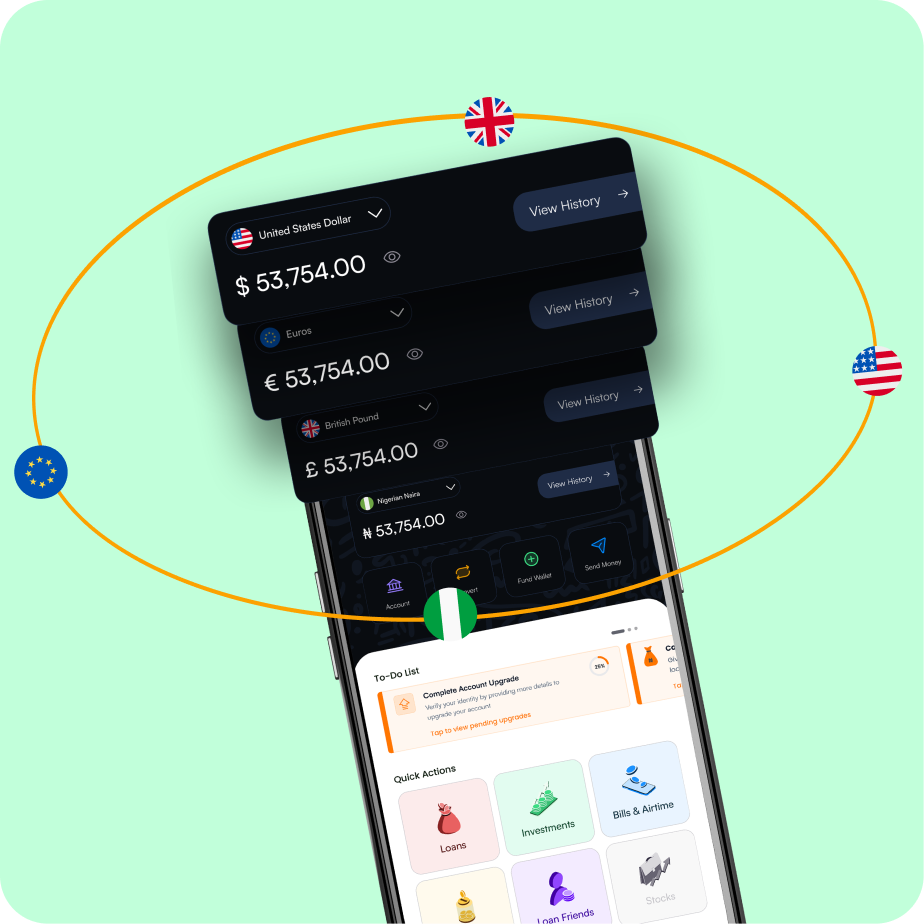
The advantage is not only safety but also daily interest on balances while they sit, which means your money keeps working for you.
4. Review quarterly
As your needs change, so should your mix. What works today may not fit six months from now. Regular check-ins keep your savings aligned with your goals.
Common Mistakes Nigerians Make with Currency Diversification
The biggest mistake is waiting until a crisis before converting to foreign currency. Many people only think about forex when panic sets in, and by then, it’s too late. Scrambling to buy dollars after the Naira has already crashed means you lock in losses instead of protecting your wealth. A smart multicurrency savings strategy is proactive, not reactive.
Another mistake is putting everything into one foreign currency. For example, some savers assume USD is the only safe bet and ignore Euro or Pounds. But just like the Naira, foreign currencies fluctuate. Relying on a single one leaves you partially exposed.
Transaction costs are also overlooked. Constantly converting back and forth between currencies racks up fees that chip away at your returns. Diversification works best when you plan allocations ahead of time and minimize unnecessary conversions.
Then there’s the issue of unregulated channels. Many Nigerians still rely on black-market operators, thinking it’s the easiest route. But this comes with higher costs, stress, and zero security. One policy change or fraudulent middleman can wipe out your funds. Using licensed platforms removes that uncertainty.
With foresight and consistency, you avoid the traps that make diversification expensive instead of protective.
Example of a Beginner’s Multicurrency Savings Plan
Sometimes the easiest way to understand a strategy is to see it in action. Imagine a young professional in Lagos with ₦1 million in savings. They want protection from Naira volatility but also need access to cash for daily life. Here’s how a balanced plan might look:
- ₦400,000 in Sycamore Target Savings plan: Sycamore Users can get up to 20% per annum when they save.
- ₦300,000 in Sycamore’s MCY wallet, USD to be precise: you can fund your wallet in Naira and instantly convert to any supported foreign currency within the app. No long queues. No black-market stress. And while your money sits in dollars it earns daily interest. Also safeguarding value against Naira depreciation .
- ₦300,000 in the Sycamore Wallet: Flexible funds that earn daily interest while remaining accessible anytime.
This mix works because it covers three essentials at once:
- Growth in Naira — ensuring the local currency isn’t idle.
- Protection in USD — hedging against inflation and devaluation.
- Liquidity — easy access for daily expenses or sudden needs.
With this setup, the saver doesn’t have to scramble when rates swing. Part of their wealth is protected globally, part is growing locally, and part is liquid and ready for use.
Checklist Insight: A good beginner’s plan should always balance three things — protection, growth, and liquidity. Ignore one, and you expose yourself unnecessarily.
How to Open a Multicurrency Wallet With Sycamore
Getting started with a multicurrency wallet is easier, and you can do it in minutes from your phone. Here’s how to get set up with Sycamore:
Step 1: Download the Sycamore app on the Google Play Store or the Apple App Store.
Step 2: Create and verify your profile (You’ll need basic personal info and a valid ID to get started.)
Step 3: Fund your wallet in Naira (Transfer from any bank account or fund directly in-app using your card.)
Step 4: Convert to USD, GBP, or EUR instantly (Inside the app, select your preferred currency and convert part (or all) of your Naira balance.)
Step 5: Watch your balance grow with daily interest (Sycamore pays you daily interest, even when your funds are not locked.)
Step 6: Withdraw or reconvert anytime (You stay in control. If you need to switch back to Naira or withdraw, it’s just a few clicks.)
Final Thoughts: Think Global, Save Smart
Wealth protection today isn’t about stashing Naira under your mattress or hoping inflation slows down. It’s about spreading your money wisely across currencies so that no single shock wipes out years of effort. A well-planned multicurrency savings strategy gives you control in an economy that often feels uncontrollable.
With tools like Sycamore MCY, you don’t just hold dollars, euros, or pounds but you earn daily interest while doing so, making your savings work even harder for you. That’s the edge that separates reaction from resilience.
You don’t need to be a millionaire to get started. You just need the discipline to start small, stay consistent, and think ahead.
With a simple currency diversification strategy, you’re not only saving money but you’re safeguarding your future against shocks that will inevitably come.
Click here to download the Sycamore app to begin diversifying your currency.