

Introduction: The Fear of Losing Money Is Real
According to a report, 41% of beginner investors invest based on social media tips, often without verifying risk. But the few that care to verify the risk have the same silent fear: What if I lose it all? The truth is, risk is unavoidable, but it doesn’t have to be unmanageable.
Think about it this way: every time you cross the road, board a bus, or even keep cash in your wallet, there’s some form of risk. Investing isn’t different. What matters is how you handle it.
Too many people shy away from investments because the fear of loss feels heavier than the hope of gain. But you don’t need to be paralyzed by that fear. With the right structure in place, you can control the downside while leaving room for your money to grow.
Beginner investors can manage risk by diversifying, setting clear goals, starting small, protecting against inflation, and reviewing their portfolio regularly.
In this guide, you’ll see exactly how to use five simple, practical strategies, and the right Platform like Sycamore NG to keep your investments safe enough to let you sleep at night, even if you’re just getting started.
Why Managing Risk Matters More Than Chasing Returns
When you’re new to investing, it’s tempting to focus on one question: how much can I earn? But the smarter question is: how much can I afford to lose? That shift in thinking is what separates reckless bets from real investing.
The goal of risk management isn’t to kill your returns but rather it is to protect your money so growth actually sticks. Without it, every gain is fragile, wiped out by a single wrong move. Beginners often underestimate this, diving headfirst into what’s trending without asking what happens if things turn the other way.
Imagine you put ₦200,000 into a single stock that everyone is hyping. A month later, the price crashes 40%, leaving you with ₦120,000. If instead you had spread that same ₦200,000 across treasury bills, a stock ETF, or a high-yield savings plan, the drop in one asset would have been cushioned by the stability of the others.
Risk management also shields you from emotional decisions. When you have a plan, you’re less likely to panic-sell during dips or chase risky opportunities out of fear of missing out. Over time, that discipline builds not just your portfolio but also your confidence as an investor.
Now that you see why risk management is more important than chasing quick returns, let’s break down the five beginner-friendly strategies that make it simple.
Strategy 1: Diversify, Don’t Gamble
Putting all your money into one investment is gambling; spreading it out is strategy. When you pour everything into a single asset, you’re betting your future on one outcome. That’s not investing but it’s gambling.
Diversification solves this by spreading your risk across different asset types so that no single failure can sink your portfolio.

For example, imagine a Nigerian investor with ₦500,000. Putting it all into one cryptocurrency exposes them to wild swings that could wipe out half the value overnight. But splitting it between crypto, mutual funds, treasury bills, and a fixed savings account changes the story. Even if one asset underperforms, the others keep the portfolio balanced.
And here’s the good news: you don’t need millions to diversify. Even with ₦100,000 for each, you can allocate small amounts across different vehicles: part into a high-yield savings plan, part into short-term treasury bills, and part into a beginner-friendly investment product.
If you want a simple way to get diversification without doing all the research yourself, Sycamore Portfolio Management gives you professional oversight such as investment planning, Asset Acquisition advisory, Corporate investment advisory, and Market and investment advisory. Your money is spread across instruments tailored to your goals, helping you avoid the “all eggs in one basket” mistake from day one.
Diversification doesn’t guarantee that you’ll never see losses, but it ensures that one bad investment doesn’t decide your financial future. It’s your first line of defense as a beginner investor.
Strategy 2: Start Small and Scale Gradually
Start with what you can afford to lose, then scale as you learn. One of the easiest traps for a beginner investor is rushing in with a big lump sum, hoping to “hit it big.” But investing isn’t a jackpot but rather it’s a journey.
Starting small gives you the space to learn, make mistakes, and build confidence without exposing yourself to painful losses.
Think about it: if you invested ₦1 million in an asset you barely understood and it dropped by 30%, you’d be staring at a ₦300,000 loss. That kind of blow can make you quit investing altogether.
On the other hand, if you tested with ₦100,000 in treasury bills or Sycamore’s Premium Yield Naira investment for 3 months and you can earn as high as up to 24% per annum, you’d still gain experience, but any setback would be far easier to handle.
Starting small isn’t about playing timid but it’s about building muscle. Each investment teaches you discipline: how to track returns, how to stay patient, and how to ignore noise. As your knowledge grows, scaling becomes safer and smarter.
This approach turns investing from an overwhelming leap into a series of manageable steps. Over time, those steps add up, and before you know it, your small beginnings have multiplied into something substantial.
Strategy 3: Hedge Against Inflation (Protect Your Purchasing Power)
If your returns don’t beat inflation, you’re losing money without realizing it. Inflation is like a silent tax on your savings. In Nigeria, with inflation hovering above 20%, keeping cash idle in a zero-interest account means your money is shrinking in real value every single day. What looks safe is actually dangerous.
Here’s a simple picture: if you had ₦1 million at the start of 2024 and left it idle, by 2025 that same money could only buy what ₦750,000 could buy a year earlier. You didn’t spend a kobo, yet your purchasing power fell by a quarter.
The way to fight this isn’t about picking at random but it’s hedging. That means placing part of your funds in investments or currencies that protect you from naira depreciation. Converting some of your cash into dollars or euros, or using regulated high-yield naira investments, ensures your wealth keeps pace with rising prices.
For instance, if you convert ₦1 million into USD at ₦1,500/$ not only retains its value but could gain when the exchange rate shifts. If that same USD is placed in a regulated dollar investment earning 8%+ annually, you’re both protecting and growing your wealth.
That’s why tools like Sycamore’s MultiCurrency (MCY) and Enhanced Dollar Investment are so valuable. They let you convert and invest your naira to USD, Euros, and pounds, holding it, and while still earning interest. Instead of watching inflation quietly erode your savings, you’re actively defending your purchasing power.
Inflation may be inevitable, but losing to it doesn’t have to be.
Strategy 4: Use Goal-Based Investing to Stay Disciplined
“Tie your money to goals, not moods.” One reason many beginners fail at investing is that they dip into their funds at the slightest temptation. Why? Because the money isn’t tied to a purpose, it’s just “there.” Goal-based investing solves this by giving every naira a job.
When you link money to a clear objective, you’re less likely to withdraw it impulsively. For instance, setting up a savings or investment plan specifically for school fees or rent means you’ll think twice before using that money to fund an unplanned expense. Instead of relying on willpower, the structure itself enforces discipline.
If you create a Target Savings plan for your child’s tuition due next year, you’ve essentially locked that money to a non-negotiable goal. Even if “hot tips” or spending temptations come up, you’re reminded that the money already has a purpose.
With platforms like Sycamore Target Savings or Education Trust Investments, you can automate this process, and you can earn up to 20% interest rate.
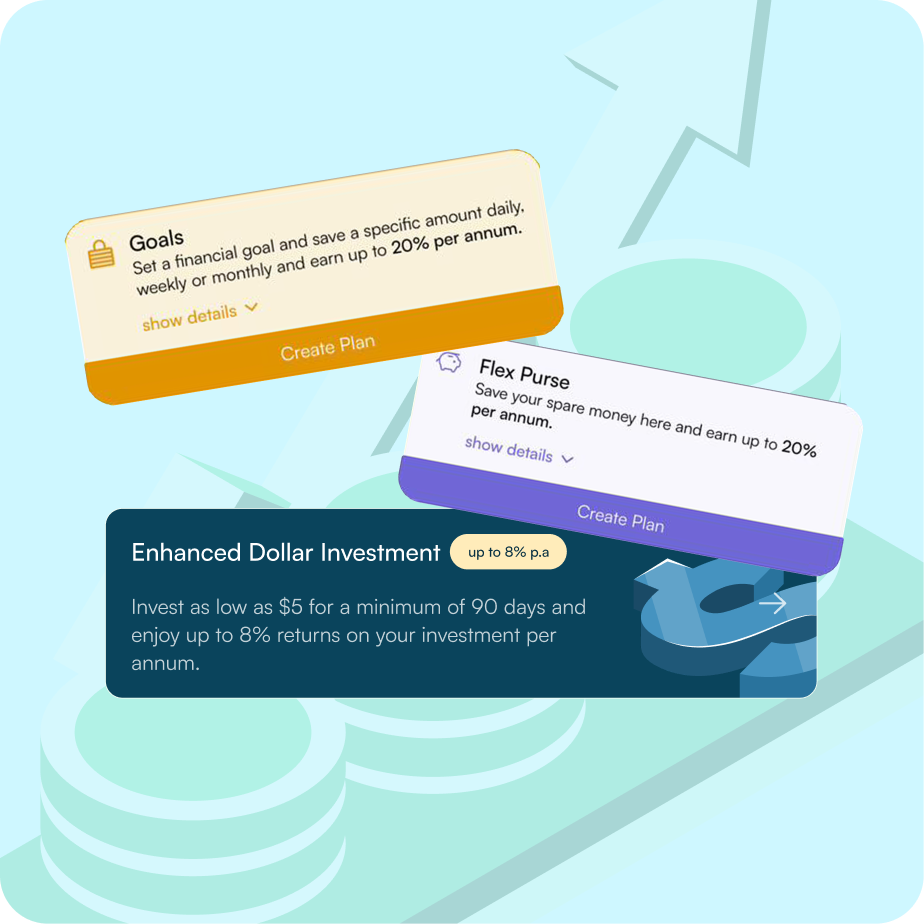
Your money grows steadily while remaining earmarked for something meaningful. That clarity reduces emotional decision-making and makes investing feel less like a gamble and more like a plan.
When your investments are tied to real-life goals, risk becomes easier to accept because every fluctuation is part of the journey to something you value deeply.
How to Save for your “Education Trust Funds” On Sycamore App
Step 1: Download the Sycamore app from the Play Store or App Store.
Step 2: Create and verify your account. It takes less than 2 minutes.
Step 3: Fund your wallet using card or bank transfer
Step 4: On the Home Page, click on the ‘savings’ button, then choose whether you need a Goals plan or a Flex Purse plan.
Step 5: Fill in your details for the Name of contribution
Step 6: Select a category for your savings (Education Trust funds)
Step 7: You input your total target amount
Step 8: Select a saving plan that suits your cash cycle. You can choose daily, weekly, and monthly depending on your approval.
Step 9: Submit your application. Once approved, you kick off.
Strategy 5: Review and Rebalance Regularly
What worked last year may not work this year, therefore always adjust. Investing isn’t a “set it and forget it” game. Markets change, inflation shifts, and even your personal life goals evolve.
If you don’t review and rebalance your portfolio regularly, you might unknowingly carry more risk than you intended.
Consider a beginner who puts most of their money into fixed-income securities in 2020. At the time, yields were attractive and comfortably above inflation. Fast forward to 2023 after the removal of fuel subsidy, and inflation outpaced those returns, leaving the investor with negative real growth.
If they had reviewed their portfolio yearly, they could have shifted some funds into equities, forex, or a managed portfolio to balance safety with growth.
Rebalancing is simply checking if your current mix of assets still aligns with your goals and risk tolerance, then making adjustments. For beginners, doing this quarterly or twice a year is enough.
If you prefer not to manage the process yourself, Sycamore’s Portfolio Management does this automatically. Experts track performance, inflation, and market conditions, then rebalance so you don’t drift into unnecessary risk.
By reviewing and rebalancing, you make sure your investments stay aligned with reality, and not just with the assumptions you made when you started.
Practical Mistakes to Avoid (Bonus Tips)
Even with the best intentions, beginners often fall into avoidable traps. Knowing them upfront saves you both stress and money.
- Don’t chase only “hot tips.” Following hype without research is how most people get burned.
- Don’t panic-sell during dips. Markets rise and fall, locking in losses is worse than riding out temporary swings.
- Don’t ignore fees and hidden charges. Small deductions can quietly eat into your returns over time.
- Don’t invest money you need immediately. Funds required for rent, medical bills, or daily expenses don’t belong in volatile assets.
Your future self will thank you for avoiding these common traps. By steering clear of these mistakes, you avoid turning manageable risks into avoidable regrets. Think of them as guardrails on your investment journey, keeping you focused on growth while preventing costly detours.
How to Set Up your Investment on Sycamore App as a Beginner.
Step 1– Fund your naira wallet (You can also convert your naira to USD for USD investment)
Step 2– Click the “Invest” button on your Sycamore app home screen
Step 3– Select either “Premium Yield Investment”, “Enhanced Dollar Investments”, Assets(Commercial papers), Stocks.
Step 4– Click “Add New Investment”
Step 5– Enter your investment name, amount (minimum of 100,000 Premium Yield Investment, $5 for Enhanced Dollar Investment,) and duration and click “Continue”.
Conclusion: Build Confidence, Not Fear
Risk will never disappear from investing but that doesn’t make it the enemy. Managed well, it becomes the very thing that allows your money to grow. As a beginner, your focus shouldn’t be on avoiding risk entirely, but on shaping it to work for you.
With the five strategies such as diversifying, starting small, hedging against inflation, tying money to goals, and reviewing regularly you’re no longer investing blindly. You’re building a structure that protects your downside while giving your portfolio room to expand.
And when you’re ready for practical tools to put this into action, Sycamore offers beginner-friendly options like Target Savings, Investments, and Portfolio Management to help you invest smarter from day one.
Your journey starts not with chasing returns, but with managing risk, because once you tame it, growth naturally follows.
Click here to fill a quick form and get started on your investing journey.