
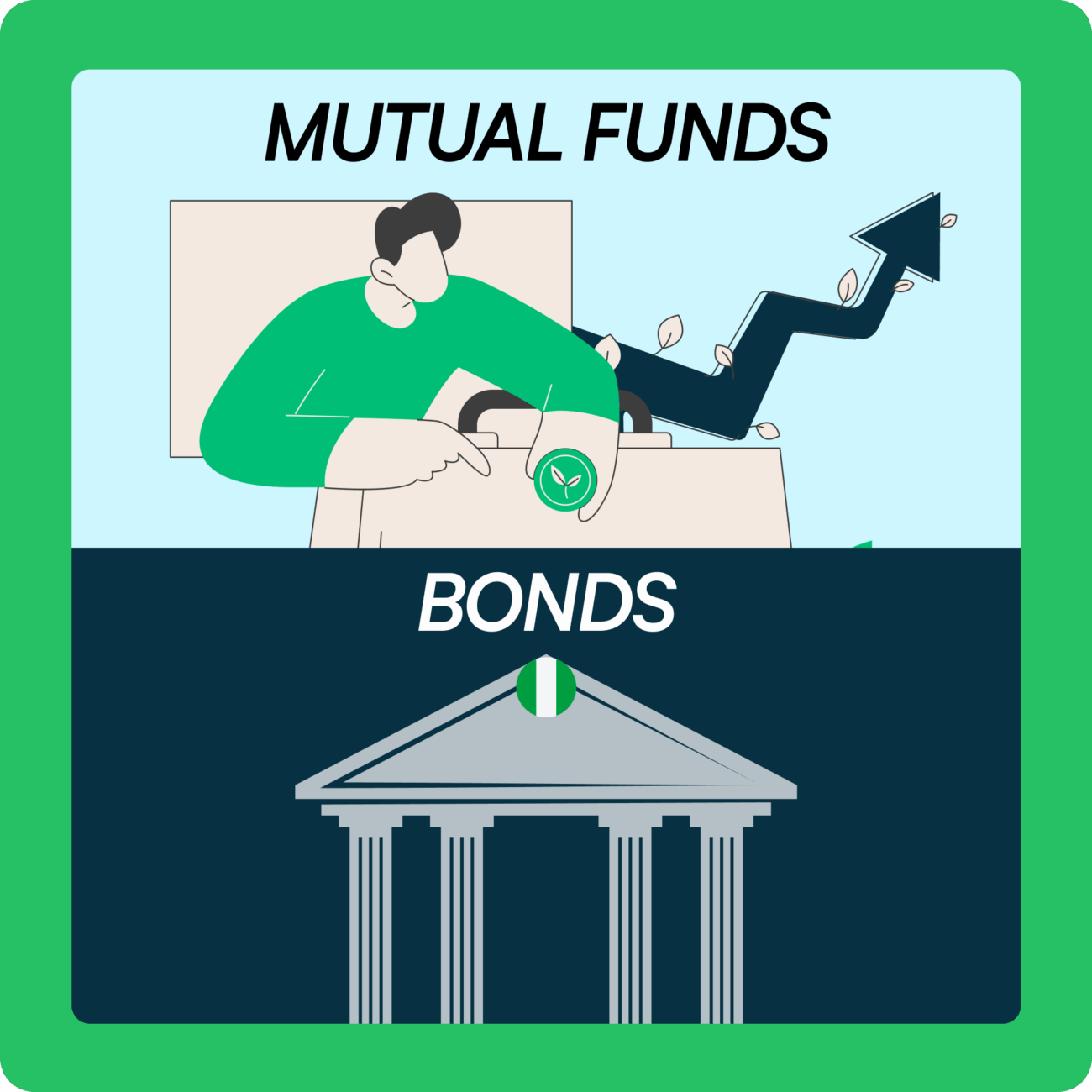

We’ve all been there before: Your salary lands in your account, but soaring prices, stubborn inflation, and a restless naira quickly eat away at its value.
Despite the fact that you’re working hard the next month’s bills are always looming. I’ve seen countless colleagues face the same squeeze, wondering how to protect and grow their income without losing sleep. According to SEC, Only about 3% of Nigerians invest in formal securities like bonds or mutual funds
That’s why, in this guide, we’re unpacking two of the most time‑tested investment tools for professionals like Sycamore, bonds and mutual funds; so you can choose the one that fits your lifestyle, risk tolerance, and future goals.
Bonds Explained: What They Are and How They Work
Bonds are one of the most stable investment tools for professionals who want predictable returns with minimal management.

When you invest in a bond, you’re essentially lending money to a government or a corporation. In return, you get paid interest called a coupon at regular intervals, and your initial capital (called the principal) is returned at the end of a fixed term.
Think of it as giving a structured loan with legal backing and a known end date. In Nigeria, the most common bonds are:
- FGN Bonds: Issued by the Federal Government, with tenors ranging from 2 to 30 years. They are considered very safe.
- FGN Savings Bonds: Also issued by the government but designed for retail investors like you. You can get started with just ₦5,000.
- Corporate Bonds: These come from companies looking to raise capital. They offer higher returns but carry higher risk than government bonds.
If you’re wondering how bonds perform in Nigeria, here’s a quick snapshot: Bond performance Nigeria:
- FGN Bonds typically yield between 13–17% per annum, depending on tenor and market conditions.
- Corporate bonds may offer higher returns, sometimes over 20%, but the risk of default is real.
While bonds are less liquid (you usually hold them until maturity), they are ideal when you don’t need immediate access to your money.
For instance, saving up for rent that’s due in a year, school fees, or even a down payment on land might be a good match for bond investments.
Pro Tip: If you like the stability of bonds but want shorter lock-in periods, platforms like Sycamore offer fixed-income plans with flexible tenors and returns up to 27.5% per annum.
Try fixed-income without the complexity. Download the Sycamore app here.
Mutual Funds Explained: Pooling for Simplicity and Growth
Mutual funds are professionally managed investment tools for professionals who want growth, flexibility, and minimal effort.
Instead of choosing individual investments yourself, a mutual fund allows you to pool your money with thousands of others.
That pool is then invested across various assets such as treasury bills, stocks, bonds, and other securities by professional fund managers.
This means you benefit from diversification, expert oversight, and lower entry costs, all while avoiding the hassle of active investing.
In Nigeria, some of the most reputable fund managers include Stanbic IBTC, ARM, Meristem, and FBNQuest, all offering different fund types to match your needs:
- Money Market Funds: These invest in short-term, low-risk instruments like treasury bills and commercial papers. They offer steady returns with daily liquidity.
- Mutual fund returns Nigeria: Money market funds currently yield between 12%–18% per annum, depending on the provider and market conditions.
- Balanced Funds: These mix fixed-income instruments (like bonds) with equities. They’re designed to provide moderate growth and income but come with some risk.
- Equity Funds: These invest mostly in shares of companies listed on the Nigerian Exchange. Returns can be high, but so can losses. These are better suited for long-term investors who can stomach market swings.
One of the most attractive aspects of mutual funds is their low barrier to entry. You can start with as little as ₦1,000 or ₦5,000, depending on the fund. This makes it accessible even if you’re just beginning your investment journey or trying to build an emergency fund gradually.
Side-by-Side Comparison: Bonds vs Mutual Funds
To help you decide which is more suitable, here’s a clear, side-by-side comparison of the two major investment tools for professionals; bonds and mutual funds.
While both are reliable vehicles for growing your money, their core characteristics differ in areas like risk, liquidity, returns, and ease of management.
The right choice depends on your financial goals, how much access you want to your funds, and your appetite for risk.
Use this comparison table as a quick reference to weigh your options:
Feature | Bonds | Mutual Funds |
Risk |
|
|
Liquidity | Lower (usually locked until maturity, unless traded on secondary market) | Higher (most allow access in 24–72 hours) |
Returns | Fixed income (typically 13–22% depending on issuer) | Variable returns (12–25%, depending on fund type and market conditions) |
Management | Self-managed or through brokers/platforms | Professionally managed |
Suitability | Ideal for long-term stability or known future expenses | Better for short to medium-term goals with some liquidity |
Entry Cost |
| Starts from ₦1,000–₦5,000 depending on the fund |
Income Flow | Periodic interest (coupon payments) | Returns are reinvested or redeemed based on fund type and terms |
Example Application
Let’s say you want to save ₦200,000 for your child’s school fees in 9 months. A mutual fund (like a money market fund) would allow you to access the money when needed, with moderate returns and minimal risk.
However, if your goal is to save for rent due in two years, an FGN Savings Bond offering 15% annually may be better because it locks the funds and pays you interest every quarter.
Which One Suits You Better as a Nigerian Professional?
Need a quick answer? If you crave fixed, predictable income for a set period, choose bonds. If you want flexibility and professional hands managing your cash, lean toward mutual funds.
Point 1 — Match the Tool to Your Timeline
- Short‑term (0–12 months) — You’re saving toward an emergency fund, holiday, or a gadget upgrade. A money market mutual fund gives you daily access and steady growth.
- Medium‑term (1–3 years) — You’re setting aside rent, professional exams, or a car deposit. Consider splitting between a 2‑year FGN Savings Bond and a balanced fund: the bond locks in reliable interest, the fund keeps part of your cash liquid.
- Long‑term (3 years+) — Planning for a home or postgraduate study? A ladder of FGN bonds or top‑rated corporate bonds can deliver higher, predictable returns.
Point 2 — Gauge Your Risk Appetite
- Low tolerance — If market swings give you sleepless nights, stick with FGN Bonds or money market funds. They feel boring but rarely shock you.
- Moderate tolerance — Ready for some volatility? Pair a balanced fund with shorter‑tenor bonds. Small bumps, better upside.
- High tolerance — Comfortable riding out dips for bigger gains? Add an equity fund to your core bond holdings.
Point 3 — Consider Your Cash‑flow Needs
- Need quarterly income? Bonds pay coupons on schedule—ideal for topping up rent or family support.
- Prefer reinvestment and compounding? Mutual funds roll earnings back into the fund, growing your pot without effort.
- Hybrid idea: Keep 60 % of savings in a money market fund (for liquidity) and 40 % in a 3‑year FGN bond (for stability). That blend safeguards emergencies while locking in solid bond performance Nigeria offers.
Point 4 — Factor in Ease of Management
- Bonds often require you to track auction dates or secondary‑market prices—unless you use a platform that automates the process.
- Mutual funds are “set‑and‑forget.” You simply fund your account, and the manager handles allocations.
Combine the Best of Both: A Hybrid Strategy
You don’t have to choose between bonds and mutual funds. Smart Nigerian professionals often get the best of both by blending them into a single, goal-driven strategy. Each tool shines in different situations.
Bonds provide stable, predictable income over time. Mutual funds give you access and growth potential, especially for short-term needs.
When combined thoughtfully, they can balance risk, returns, and liquidity in a way that suits your life, not just a textbook.
Here’s how a hybrid approach can work in practice: Let’s say you earn ₦500,000 monthly and can invest ₦150,000. You might:
- Put ₦50,000 in a money market mutual fund to maintain liquidity, this helps cover surprise expenses, travel plans, or even temporary job gaps.
- Allocate ₦100,000 into an FGN Savings Bond or a fixed-income instrument like Sycamore’s investment plans that pays predictable interest (up to 27.5%) per annum.
Over time, this mix:
- Builds a financial cushion you can access quickly
- Delivers fixed income you can plan around (ideal for tuition, rent, or business goals)
- Reduces stress from market volatility
Sycamore NG: A Smarter Way to Access Investment Tools
If you’re looking for reliable, professional-grade investment tools for professionals in Nigeria without the hassle of managing everything yourself, Sycamore NG is built with you in mind.
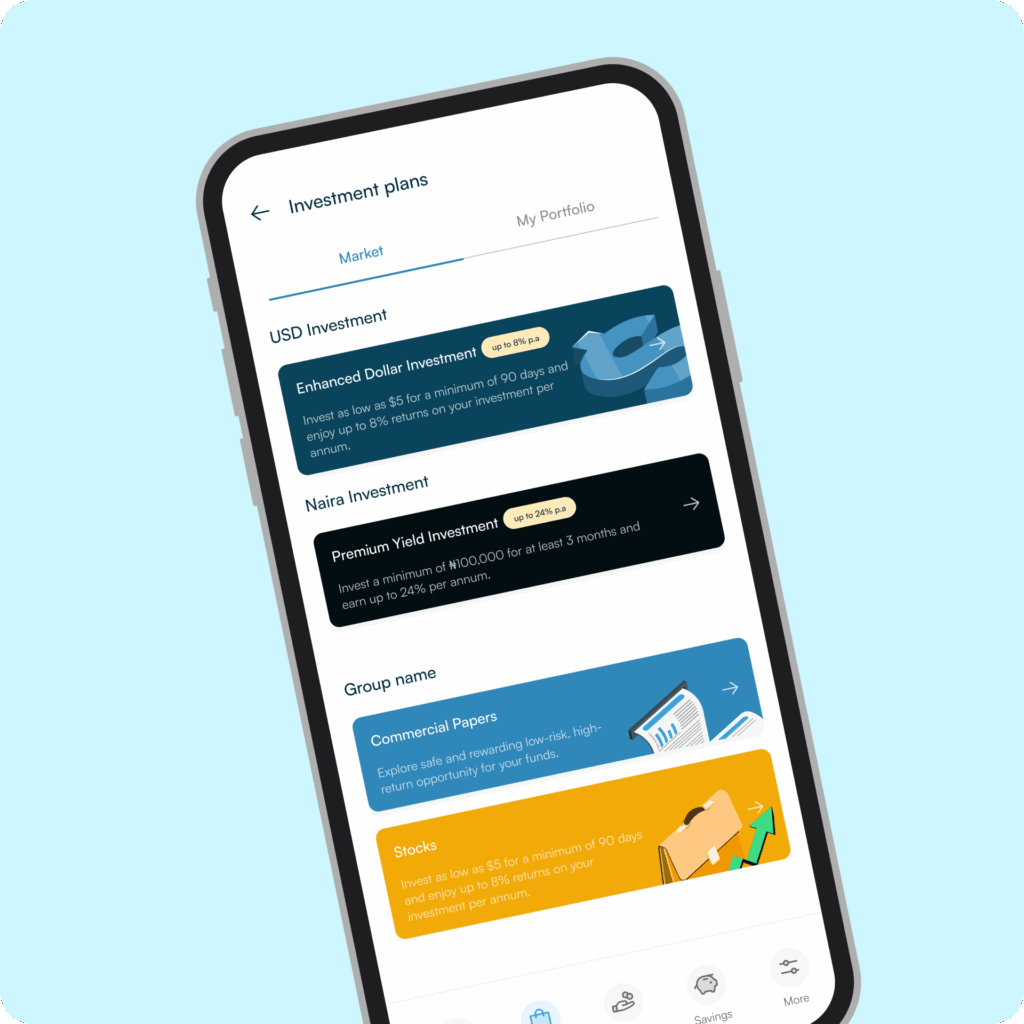
Sycamore is a Nigerian financial services platform that offers regulated fixed-income products similar to corporate bonds, with attractive returns and flexible terms.
The company understands the needs of professionals who want to grow their wealth without losing control or falling into risky schemes.
Here’s how Sycamore stands out:
- Fixed-Income Products with High Returns
With Sycamore’s fixed-income plans, you can earn up to 27.5% per annum, depending on your tenor and capital size. This rivals top-performing bond performance Nigeria offers, and gives you predictability over a defined period, just like a bond would. - Flexible Tenors & Payouts
You don’t need to lock your funds for years. Tenors start from a few weeks to several months, making it easy to align with your financial timeline, whether you’re saving for a wedding, rent, or a relocation fund. - Professional Management, Without the Stress
While you retain control, Sycamore handles the backend; risk assessment, structuring, and compliance; so your money works intelligently without daily monitoring. - Daily-Interest Wallets & Cashback Savings
Want even more flexibility? Sycamore also offers goal-based savings and a daily-interest wallet that grows idle funds while still giving you access. You even get cashback rewards when you meet your savings goals. - Regulated & Transparent
Sycamore is a registered investment company licensed by the SEC and operates with transparency, making it ideal for working professionals who value both safety and growth.
Download the Sycamore app here to start investing today
Real-Life Snapshot: Kunle’s Journey as a Mid-Level Banker
Kunle, a practical example of how to use these investment tools for professionals in a balanced, effective way. Kunle is a 35-year-old banker living in Port Harcourt.
With a stable income and a young family, his goals were clear: Keep some cash accessible for emergencies, Grow his money faster than a regular savings account, and avoid complex or high-risk investments that demand daily attention
Kunle had ₦300,000 to invest. Instead of putting it all in one place, he split it evenly:
- ₦150,000 into a money market mutual fund: This gave him liquidity in case of family emergencies or sudden expenses. The fund yielded about 14.5% annually, and he could withdraw within 24–48 hours if needed.
- ₦150,000 into Sycamore’s fixed-income plan: With a tenor of 6 months and returns of around 27.5% p.a., this portion of his money earned steady interest with a clear maturity date; ideal for helping with next year’s rent.
By adopting a hybrid approach, Kunle maintained access to half his capital, earned predictable passive income from the other half, and avoided the stress of market fluctuations or complex trading.
Build your own hybrid plan today. Download the Sycamore app here.
How to Start with Bonds or Mutual Funds Today
You don’t need millions or insider knowledge to get started. With just a few thousand naira and clear goals, you can begin using proven investment tools for professionals today.
The hardest part is usually getting started, but once you do, consistency builds momentum.
Whether you’re leaning toward bonds, mutual funds, or a hybrid approach, the process is simpler than it looks.
Here’s a 4-step checklist to guide your first move:
1. Define Your Financial Goals
Are you saving for emergencies? A business launch? Rent in six months? School fees in two years? Knowing your goal helps determine whether you need flexibility (mutual funds) or predictability (bonds).
2. Choose the Right Product Based on Your Timeline & Risk Profile
- For short-term access: Money market mutual funds
- For fixed-income stability: FGN Savings Bonds, Sycamore’s fixed-income plans
- For long-term growth: A balanced portfolio with both tools
3. Start Small and Grow Over Time
You can begin with as little as ₦1,000–₦5,000, depending on the fund or bond option. What matters more is consistency. Even ₦10,000 monthly can compound into something meaningful over time.
4. Use Trusted Platforms to Open and Track Investments
- For mutual funds: Consider regulated providers like ARM, Stanbic IBTC, or Meristem.
- For bonds: Watch out for FGN Savings Bond auction dates or invest via your bank.
- For a simpler experience combining fixed returns and daily-interest wallets, try Sycamore.
Final Thoughts: Choose What Works for You, Not Just What’s Popular
There’s no one-size-fits-all approach to investing. The best decision is the one aligned with your goals, income cycle, and financial mindset. Bonds and mutual funds are both solid investment tools for professionals, but they serve different needs.
If you’re a Nigerian professional with irregular income or short-term goals, mutual funds, especially money market funds may give you the flexibility and access you need.
If you value peace of mind and predictability, especially for long-term commitments, bonds (or bond-like instruments like Sycamore’s fixed-income plans) might suit you better.
You’ve worked hard to earn your money, now it’s time your money started working just as hard for you.